Operations 12 November 2026
An Oversized Tray Is a Capacity Problem Before It Is a Cost Problem
Tray rationalization is usually framed as a sterile processing savings exercise. The harder question is what oversized, hard-to-locate sets do to case readiness, loaner turns, and the teams moving inventory across sites.
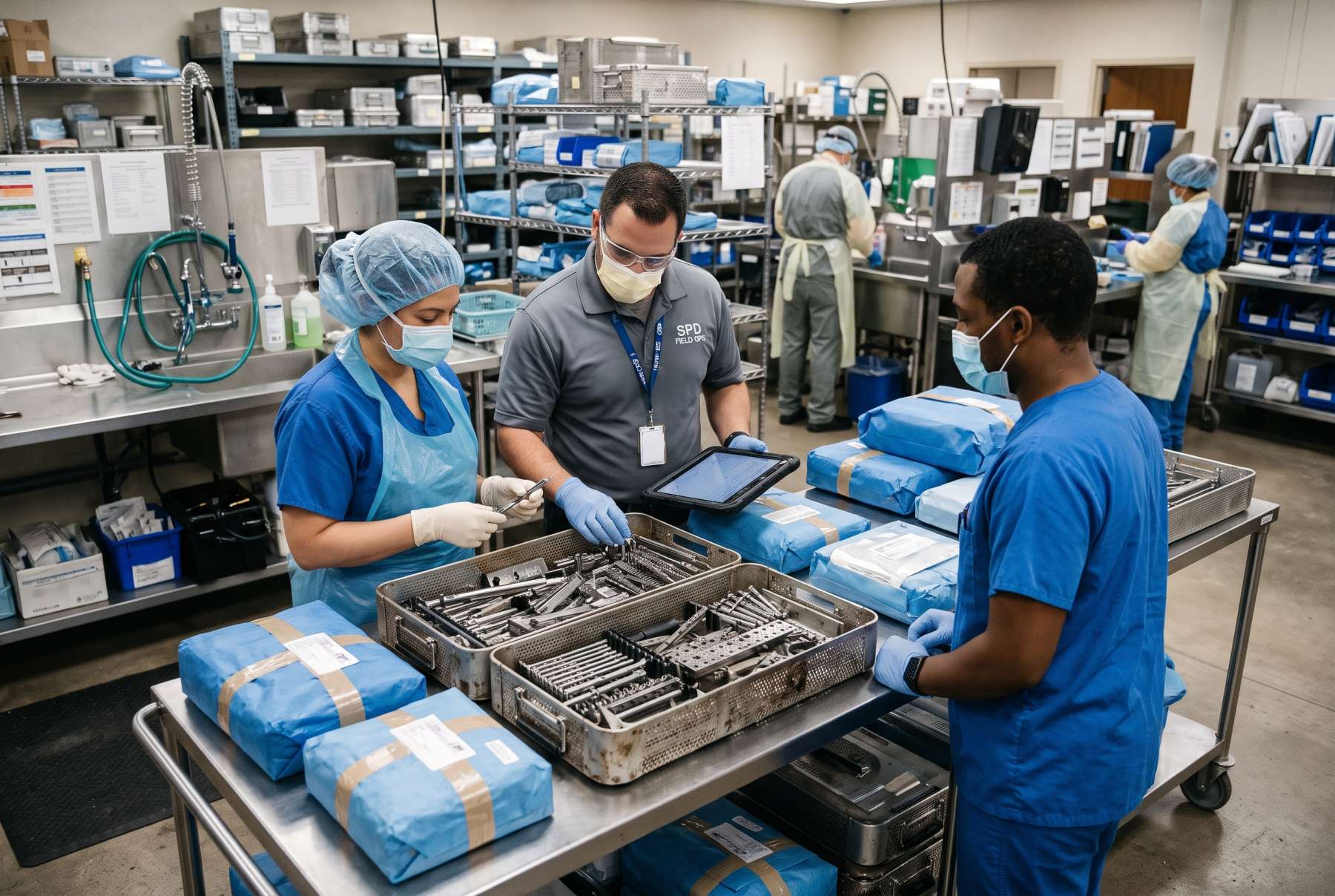
An oversized surgical tray is usually treated as a sterile processing problem. It takes longer to clean, uses more water and chemicals, occupies more cart space, and may wear out instruments faster. Those costs are real. But they are not the whole cost.
The larger operational problem is that a tray can consume capacity without producing usable case coverage. It may be sitting in decontamination, waiting for inspection, staged for a case that moved, or parked at a hospital that is not using it. On paper, the asset exists. In the schedule, it may be unavailable. For a distributor, manufacturer, or 3PL, that gap is where a tray pool starts to look larger than it really is.
A recent Becker's ASC report on hidden savings put tray rationalization back in the operational conversation, noting that oversized sets increase processing time, resource use, staff effort, and instrument wear. A separate report on the true cost of surgery described work that extends beyond the procedure itself, including transportation, decontamination, handling, and off-site sterile processing. (beckersasc.com)
The field question is not simply which instruments can be removed from a set. It is whether the organization can see what that set is doing before, during, and after processing. Without that picture, rationalization may reduce the physical size of a tray while leaving the operational delay untouched.
The hidden cost is time spent making a large set usable
Every tray carries a sequence of work that is easy to overlook when the asset is represented by one line in an inventory file. Someone receives it. Someone moves it to decontamination. Someone checks the contents. Someone resolves missing or damaged instruments. Someone assembles, wraps, sterilizes, cools, stages, and releases it. If the tray is a loaner, someone also has to coordinate the return, the next destination, and the case date.
When the set is oversized, each part of that sequence can take more capacity. More instruments require more inspection. More weight makes handling less convenient. More content creates more opportunities for a missing component to be discovered late. If the set is sent to an off-site processing location, the organization also has to account for the time between departure, processing, return transport, receiving, and final staging.
That is why an oversized tray can become a capacity problem before it becomes a line-item expense. The set occupies labor and equipment while its status remains unclear. A team may not know whether it is still in decontamination, already wrapped, waiting for a missing instrument, or physically complete but not yet released. The delay is then described as a staffing issue, a carrier issue, or a scheduling issue, even though the common failure is visibility.
For hospital and ASC operators, the consequence is often a backup set or an emergency shipment. For manufacturers and distributors, it can be a loaner pool that appears fully stocked but cannot support the next case. For a 3PL, it can be a movement record that shows a delivery without showing whether the asset entered the next operational step.
Rationalization only works when the set can be followed after the decision
Tray rationalization is not a one-time cleanup project. Removing unused instruments changes the identity, handling, and readiness workflow of the asset. The set may need a new content list, revised instructions, a different processing profile, or a new location in the rotation plan. If the organization cannot tell where the tray is after the change, it cannot tell whether the redesign improved availability.
This matters because physical presence and case readiness are different states. A tray can be at the hospital but not yet in sterile processing. It can be wrapped but waiting for a release check. It can be ready for one procedure but not another because a required component is missing. It can be listed as returned while still sitting at the wrong dock or inside a field representative's vehicle.
The FDA's recent correction involving TS Miscellaneous Instruments Trays, Triathlon, shows how a processing instruction can create work across a distributed loaner network. The FDA record stated that affected trays supplied by sale or loan required a longer dry time when sterilized in blue wrap, and that distributors and consignees were expected to pass the correction to organizations holding the trays. (accessdata.fda.gov)
The point is not that tracking replaces sterile processing controls. It does not. A location system cannot decide whether an instrument is clean, complete, or released for use. It can, however, make it easier to see which assets are at a hospital, warehouse, sterile processing department, or field location when an operational change occurs. That distinction is important when a tray redesign, revised instruction, or case change affects more than one organization.
For a tray pool, the useful record is not just an asset number and a last scan. It is a live answer to several practical questions: where is the set, which organization has custody, what case is it supporting, and what action is expected next? A custom autoclavable tag that remains with the asset through sterilization helps preserve that visibility through the part of the workflow where many manual records disappear. The goal is not to create another status screen. It is to reduce the number of times a person has to walk, call, or text to establish the next move.
The right measure is usable coverage, not smaller trays
A smaller tray is not automatically a better tray. If rationalization removes instruments that are rarely used but increases the number of separate sets needed to cover the same case mix, the organization may simply trade processing burden for routing complexity. If a revised set moves between a manufacturer, distributor, 3PL, hospital, and ASC, its value depends on whether it can be found and made ready at the right time.
That is why the most useful measure is not only tray size or utilization. It is usable coverage. How many scheduled cases can the pool support? How often is a set unavailable because it is in processing, missing a component, delayed in transit, or assigned to another site? How long does it take from case cancellation or procedure completion to the next confirmed available state? How many emergency shipments are caused by a set that technically existed but could not be located?
Those questions require a shared picture across teams. A field representative may need to know whether a tray is ready to pick up. A distributor may need to know whether a loaner has actually returned. An ASC may need to know whether the required set has entered processing rather than merely arrived at receiving. A manufacturer may need movement history before deciding whether to add inventory to a region.
Real-time tracking supports that shared picture by showing movement across warehouses, hospitals, ASCs, and sterile processing locations. Scheduling and inventory information can then be considered alongside location, rather than treated as separate systems that each describe only part of the situation. The operational benefit is modest but valuable: fewer calls asking where a tray went, fewer duplicate shipments, and earlier notice when a case is at risk.
The same logic applies to implant kits and other critical inventory. A kit marked on hand may be in transit, staged for a canceled case, short a component, or waiting for documentation. The question is not whether the organization owns the asset. The question is whether the asset can support the next case without creating a new exception.
Tray rationalization deserves attention because it can reduce real processing work. But it should not be sold as a spreadsheet exercise. The tray is part of a moving network, and its cost includes every handoff that keeps it from becoming case-ready. A set that is smaller but invisible can still consume the same calls, searches, and emergency decisions as the oversized set it replaced.
The sharper question for 2026 is not, “Can we remove instruments from this tray?” It is, “Can we prove what this tray is doing, where it is, and when it can support the next case?” Until the answer is visible, rationalization is only a physical change. The capacity problem is still moving through the network.
Frequently asked questions
How can tracking show whether an oversized tray is actually available for the next case?
Tracking gives teams a shared view of where a tray or loan set is across warehouses, hospitals, ASCs, and sterile processing locations. When paired with case scheduling, that location information helps distinguish an asset that exists from one that is positioned and available for an upcoming procedure.
It does not determine whether a tray is clean, complete, or released. Those processing decisions remain with the responsible clinical and sterile processing teams.
What should distributors and 3PLs measure after rationalizing a tray?
Look beyond the physical size of the set. Useful measures include movement and availability, how often the tray supports scheduled cases, and how frequently teams need searches, duplicate shipments, or emergency moves.
Utilization reporting can help connect those measures to the tray pool, while real-time tracking provides the movement history behind them.
Can Hansel help coordinate trays when a case is canceled or moved?
Hansel's case scheduling capabilities show upcoming procedures, required trays, and inventory readiness. That gives teams a clearer basis for deciding whether a set should remain staged, be redirected, or enter the next step in the rotation.
The platform supports coordination, but it does not replace the organization's scheduling, release, or sterile processing controls.
How does visibility help when a loaner tray moves between several organizations?
Real-time tracking creates a shared picture of a tray's movement across manufacturers, distributors, 3PLs, hospitals, ASCs, and sterile processing locations. That can reduce the calls and manual searches needed to confirm where a loan set is and which team has custody.
For a loaner pool, the practical value is earlier notice when a tray is delayed, assigned elsewhere, or not yet back in the expected location.
Can better tracking reduce the need to add more trays to a regional pool?
It can provide better evidence before an organization expands inventory. Utilization and movement data may show whether apparent shortages are caused by genuine demand or by trays that are delayed, misplaced, in processing, or assigned to another site.
That does not guarantee that fewer assets will be needed, but it helps separate a capacity gap from a visibility gap.
What information should stay with a redesigned tray after rationalization?
The operational record should connect the tray to its location, movement history, case assignment, and relevant asset documentation. Hansel can attach guides, photos, IFUs, and other key files directly to trays and inventory so teams can access the information associated with the asset.
That visibility is especially useful when a revised set or processing instruction affects multiple sites, although each organization remains responsible for applying its approved procedures.