Scheduling 6 November 2026
The Schedule Changed. The Tray Network Did Not.
Anesthesia gaps and block volatility are forcing ASCs to reschedule faster. The operational risk is not only a lost case. It is the tray, loan set, or implant kit still moving toward yesterday's plan.
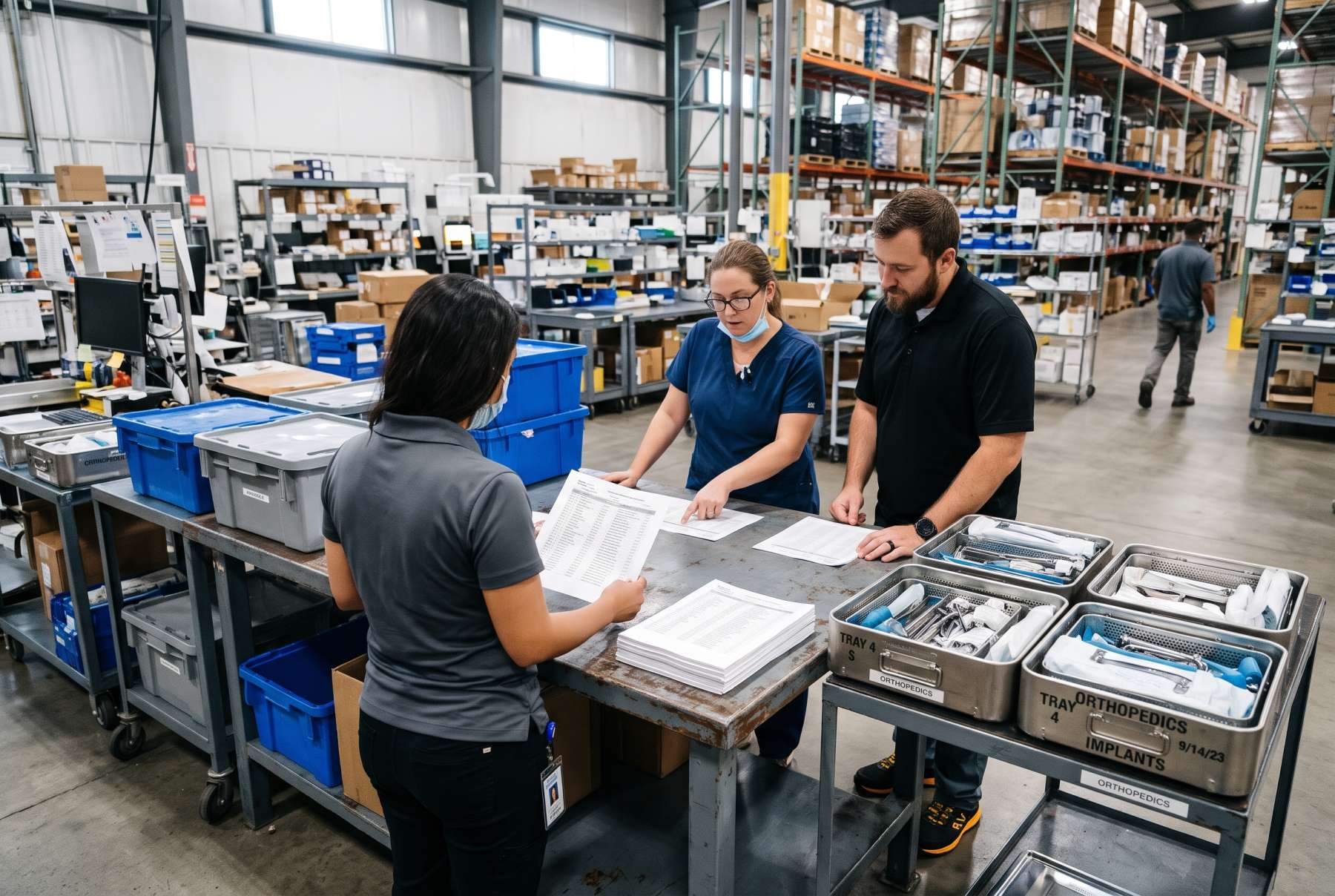
When an ambulatory surgery center cancels a case because anesthesia coverage falls through, the schedule changes in minutes. The tray network usually does not.
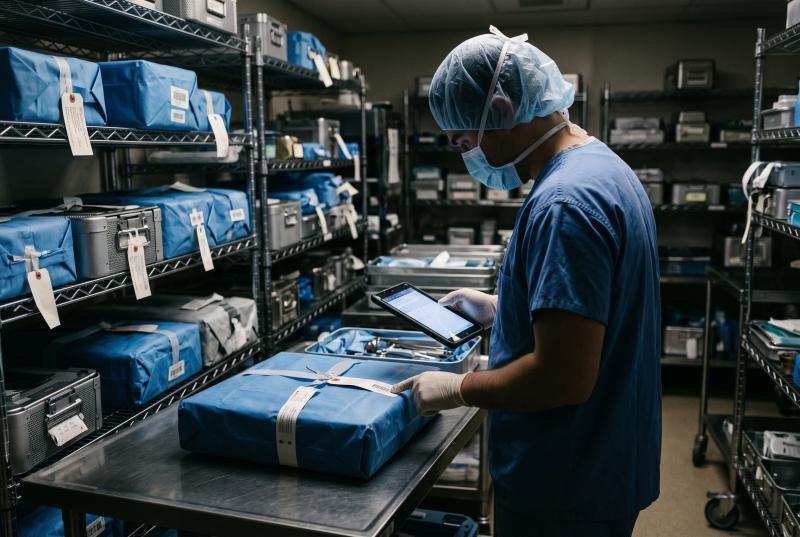
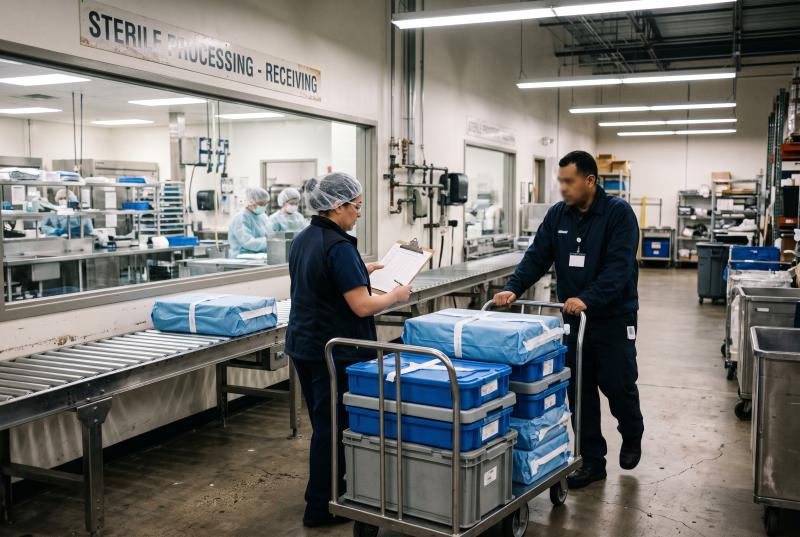
A loan set may already be in transit. An implant tote may be sitting at the hospital instead of the ASC. A field representative may have staged instruments for a case that is now moving to next week. Sterile processing may have accepted a set, started the workflow, or placed it in a queue based on the original date. By the time someone calls to ask what happened, the case has become a logistics exception spread across several organizations.
That matters because anesthesia access is no longer a theoretical constraint for ASCs. A 2026 survey of 307 US surgery centers found that 76% reported adequate access to anesthesia providers, which still leaves nearly one in four centers reporting difficulty. Among centers with access problems, 75% said the issue affected procedure volume. Becker's ASC coverage also described the trade-offs centers are making to preserve coverage. (beckersasc.com)
The operational lesson is easy to miss: a changed case plan does not automatically produce a changed asset plan. The gap between those two systems is where trays go dark, loaner returns get delayed, and tomorrow's case inherits yesterday's confusion.
Cancellation is not the end of the movement
In a hospital or ASC, the first response to a canceled case is usually clinical and administrative. Cancel the room. Notify the surgeon. Reschedule the patient. Adjust staffing. Notify anesthesia. Those actions are necessary, but they do not answer the physical questions that follow.
Where is the tray now? Has it been received? Has it entered decontamination? Is it still sealed in a shipping container? Did the distributor route it to the wrong facility because the original case date remained on the request? Was the implant kit opened, counted, or partially used? Does the manufacturer expect the set back, or does the revised date mean it should stay local?
Each question can be answered by a different person with a different fragment of the record. The ASC may have the new schedule. The field rep may have a text message. The 3PL may have a shipment scan. The hospital may have a sterile processing record. The manufacturer may have the asset master. None of those records, by itself, is the live operational picture.
This is why a canceled case should be treated as an exception event, not simply a blank space on the schedule. The exception begins when the planned procedure changes and ends only when every affected asset has a confirmed next state.
The hidden cost is the second movement
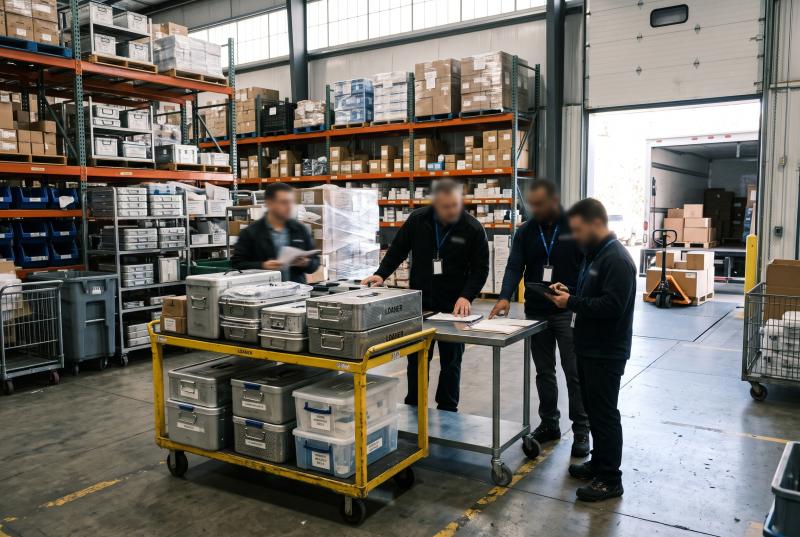
The first movement is familiar: the tray travels from a manufacturer, distributor, or 3PL toward the facility. The second movement is the one that absorbs labor. Someone has to unwind the original plan.
That may mean redirecting a shipment, asking a rep to retrieve a set, moving an implant tote into a secure holding area, changing a sterile processing priority, or confirming that an unused loaner can be returned without compromising the next case. When the asset cannot be located quickly, the team often creates a third movement: a replacement shipment or emergency courier run.
Those movements are expensive even when no case is ultimately lost. They consume field-team time, warehouse labor, courier capacity, sterile processing attention, and clinical coordination. In an ASC environment already under pressure from labor and reimbursement, avoidable movement becomes a margin problem.
Recent ASC reporting shows why this pressure is becoming more visible. HST Pathways data covering 682 surgery centers in 45 states found that block utilization at 2-OR centers fell from 71% in 2024 to 59% in 2025, while larger centers improved. The variation does not prove that trays caused the change. It does show that schedule performance is uneven, and that a smaller center has less room to absorb a late operational surprise. Becker's report on ASC block utilization provides the detail. (beckersasc.com)
The obvious explanation for a missed block is often staffing, surgeon availability, or patient readiness. Those explanations may be correct. But once a case changes, the device network can either recover cleanly or create another delay. A schedule problem becomes a tray problem when nobody can see which assets were affected by the change.
Exception management needs an asset view
Most organizations already have a process for changing the schedule. Fewer have a shared process for changing the asset plan.
A useful exception view starts with the case and works outward. It should show the required trays, loan sets, implant kits, and other critical assets, then identify which ones are packed, moving, received, in sterile processing, available, or awaiting return. The point is not to let software make a clinical release decision. Sterile processing controls, inspection, documentation, and quality requirements remain with the responsible teams.
The point is to remove the avoidable uncertainty around those controls. If a case moves from Tuesday to Friday, the operations team should not need a chain of calls to determine whether the tray is still on the road or already inside the facility. If a case is canceled, the distributor and manufacturer should be able to see whether the loan set needs retrieval or can remain staged for the revised date. If an implant kit was opened but not used, the team should have a clear operational path for documenting what happens next.
Real-time tracking is useful here because it follows the asset rather than relying on the person who last touched it. An autoclavable tag that stays with the tray through sterile processing preserves visibility where a label, spreadsheet, or shipping scan often stops. A shared view also reduces the gap between the field rep's understanding, the facility's schedule, and the 3PL's shipment status.
The economics are practical. The value is not only finding a missing tray faster. It is reducing the number of times a team has to search, call, resend, recount, or reserve duplicate inventory because the original set is somewhere in the network but not confidently visible. For organizations managing hundreds or thousands of assets, that difference can be more meaningful than another report showing aggregate utilization.
Define the next state before the next case
The strongest teams do not wait until the morning of the rescheduled case to reconcile what changed. They define the next state as soon as the schedule exception is known.
For a canceled case, that state might be returned to the 3PL, held at the ASC, redirected to a hospital, or reserved for the new date. For a delayed case, it might be received but not yet processed, in processing, or ready pending a final operational check. For an implant kit, it may be unopened, opened and reconciled, partially used, or quarantined for review. The labels will vary by organization, but the discipline is the same: one event should produce one accountable next state.
That discipline also clarifies responsibility across the network. The ASC owns the schedule change and local handling. The hospital or sterile processing department owns its processing and release controls. The field team owns coordination with the clinical site and manufacturer. The distributor or 3PL owns routing and return execution. The manufacturer owns its asset records and commercial requirements. A shared asset picture does not eliminate those responsibilities. It makes the handoff between them easier to see.
The next wave of ASC pressure will not be solved by treating every problem as a staffing problem or every delay as a courier problem. A volatile schedule exposes whether the device network can adapt without losing track of the physical inventory that makes the case possible.
The sharper question is not simply, “Was the case canceled?” It is, “What changed for every tray, loan set, and implant kit attached to that case, and can each party prove where the asset is now?”
When the answer is immediate, a schedule change stays an exception. When the answer requires a phone tree, the schedule has already changed twice: once in the OR and once in the supply chain.
Frequently asked questions
What should happen to a tray or loan set when an ASC case is canceled?
The schedule change should trigger an asset review, not just a room cancellation. Teams need to confirm whether each tray, loan set, or implant kit is still moving, has arrived, entered processing, remains staged, or needs to be returned or redirected.
A shared tracking view can help the ASC, field team, distributor, manufacturer, and 3PL work from the same current asset status.
How can teams avoid sending replacement inventory when the original set is still in the network?
First identify the affected assets and their latest known locations before arranging another shipment. Real-time tracking for trays, loan sets, and critical inventory can reduce the need to search across calls, texts, spreadsheets, and shipment scans.
This does not eliminate the need for clinical or sterile processing controls. It gives operations teams better information before they commit to a replacement movement.
Can case scheduling and asset readiness be reviewed together?
Yes. A case scheduling workflow should connect upcoming procedures with the required trays and inventory readiness, so a changed date prompts a review of the physical assets attached to that case.
That view helps teams distinguish between an asset that is available, already moving, awaiting processing, or still unconfirmed before the rescheduled procedure.
How should implant kits be handled when a procedure is postponed after the kit has moved?
The team should document the kit's next operational state, such as unopened, opened and reconciled, partially used, held locally, or returned for review. The appropriate disposition remains with the responsible clinical, quality, and operations teams.
Implant inventory tracking can help show what was packed, missing, moving, or used, giving the next team a clearer starting point when the case is rescheduled.
Who is responsible for updating the asset plan after a schedule change?
Responsibility remains distributed. The ASC owns the schedule change and local handling, sterile processing owns its processing and release controls, the field team coordinates with the clinical site, the distributor or 3PL manages routing and returns, and the manufacturer maintains its asset records and commercial requirements.
A shared asset picture does not replace those responsibilities. It makes the handoffs and unresolved exceptions easier to see.
What information should an operations team review before the rescheduled case date?
Review the required trays, loan sets, and implant kits, along with each asset's current location and status. Confirm whether items are received, in processing, available, still moving, staged for the new date, or awaiting return.
Real-time inventory auditing can also help verify that the physical inventory record matches what the network expects before the case is due to proceed.