Operations 10 November 2026
Returned Is Not Ready: The Missing State in Loaner Tray Logistics
An unused loaner set can leave the hospital and still remain unavailable for the next case. The gap is not transportation. It is the missing operational record between return, inspection, reprocessing, and readiness.
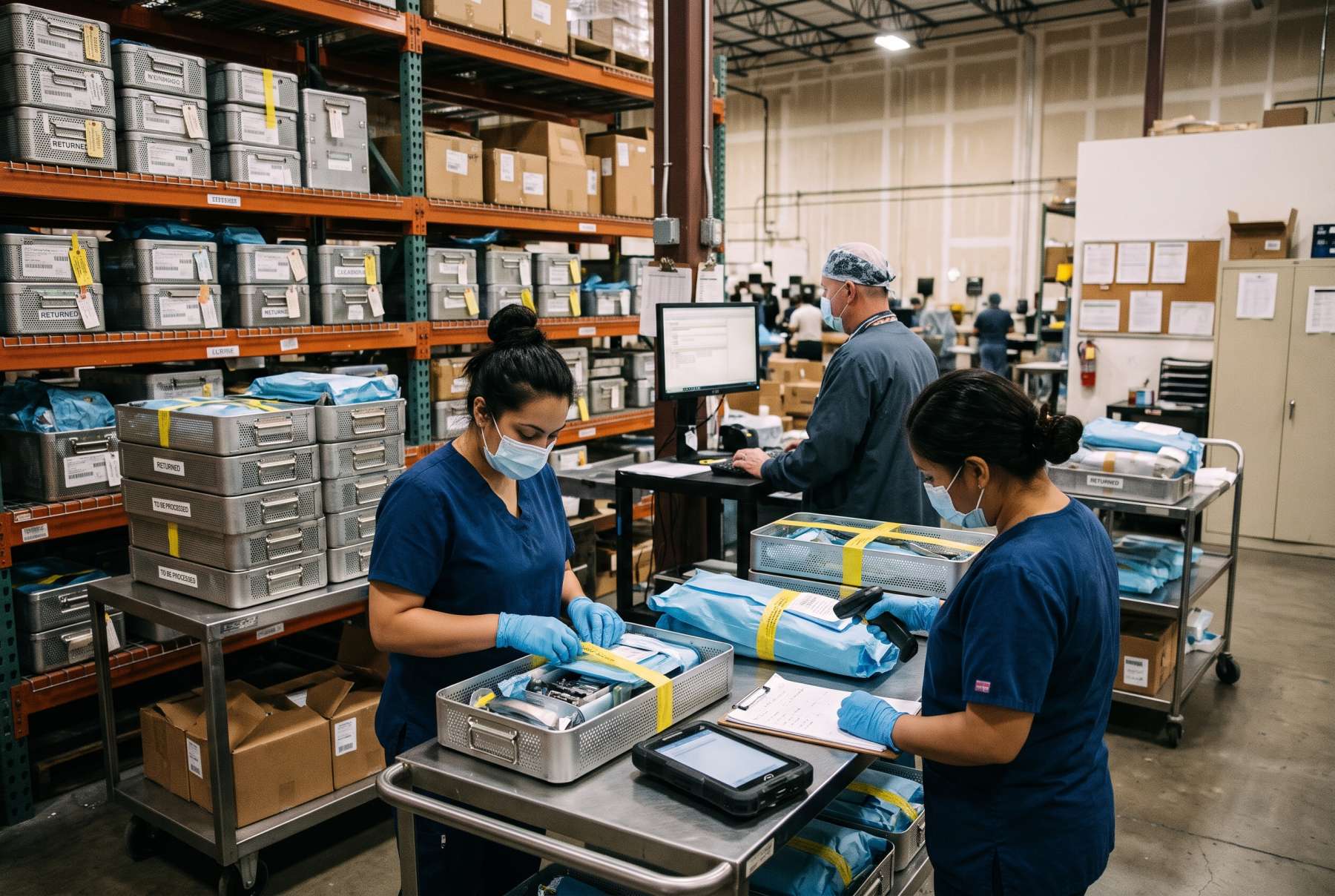
“Returned” is one of the most misleading words in loaner tray logistics.
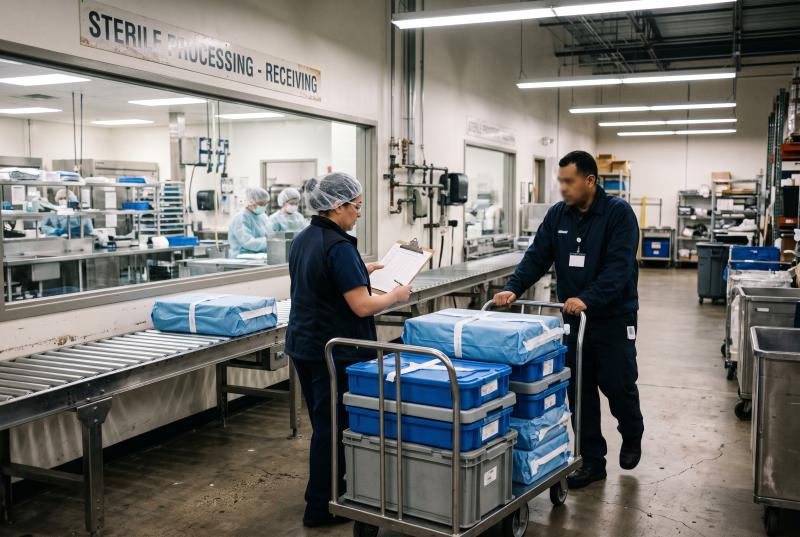
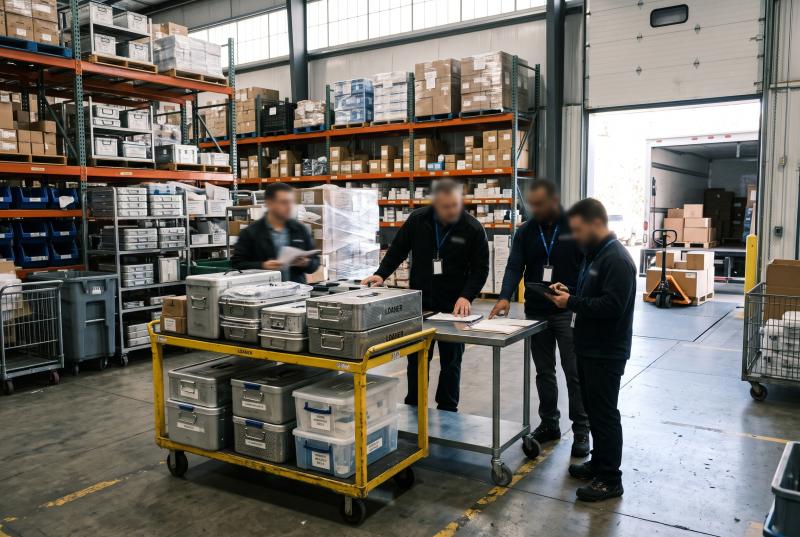
A set can be returned to a distributor but still be sitting in a hospital loading area. It can be scanned by a carrier but not yet received by the manufacturer. It can arrive at a warehouse with missing instruments, a damaged container, an open seal, or a processing question that keeps it out of circulation. It can be physically present and still unavailable for the next case.
Those distinctions matter more as surgical networks become less predictable. Cases are moved, consolidated, canceled, or shifted between hospitals and ASCs. Loan sets cross the same boundaries through distributors, 3PLs, manufacturer warehouses, sterile processing departments, and field representatives. The physical movement may be routine. The status record is where the operation usually breaks.
The current industry conversation is making that gap harder to ignore. A 2026 update from AORN on instrument cleaning guidance includes new direction on transporting contaminated instruments off-site. At the same time, the FDA has continued to publish corrections involving procedure trays, convenience kits, and reusable device instructions. One October 2026 FDA record covered 577 surgical trays distributed through sale or loan, with the correction tied to sterilization dry time instructions.
The lesson is not that every return is a recall event. It is that a return is an operational transition, not a final condition.
The return trip has more than one destination
On paper, the reverse movement looks simple. The case is canceled or completed. The field team collects the loaner set. The distributor receives it. The manufacturer gets it back into inventory. The next request goes out.
In practice, the tray can pass through several different states before anyone can responsibly promise it for another procedure:
- Used or opened in the procedure area
- Awaiting decontamination or transport to sterile processing
- Processed but not yet inspected
- Missing instruments or awaiting reconciliation
- Quarantined for damage, contamination, documentation, or recall review
- Received by a distributor or 3PL but not yet checked into the correct inventory record
- Available for allocation but not packed for a specific case
- Case-ready and committed to a confirmed procedure
A spreadsheet often compresses all of those conditions into one field: returned. A phone call may improve the detail temporarily, but only for the people who were on that call. The next person looking for the set sees an old status, an incomplete note, or no record at all.
This is why the missing return status creates so much unnecessary movement. A field representative may request a replacement because the original set appears unavailable. A distributor may ship another set because the first one was marked returned but cannot be located. A warehouse may count the tray as on hand even though it is waiting for inspection. The hospital may believe the manufacturer has custody while the carrier still has the container.
Each team is acting on a reasonable local assumption. The network still produces the wrong answer.
“Back at the warehouse” is not the same as available
For device companies and distributors, the temptation is to measure reverse logistics by transit time. How quickly did the container leave the hospital? How long did the carrier take? When did the receiving dock sign for it?
Those are useful measures, but they stop before the operational question is answered. The important question is when the asset became usable again.
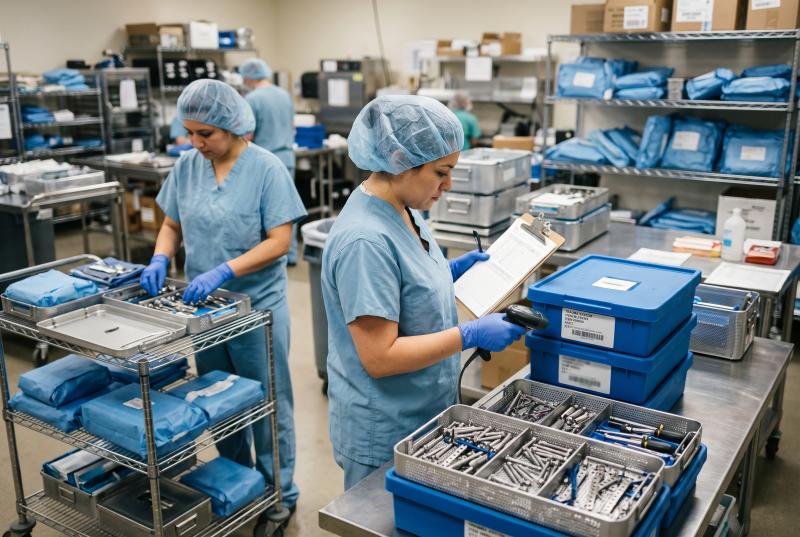
A tray that arrives at a warehouse may need to be opened, counted, inspected, photographed, cleaned, repaired, reprocessed, or matched against the case record. A loan set may have been opened but not used. Another may have been partially used. A third may have been sent to the wrong facility and returned with a different instrument mix. The container's arrival does not resolve those conditions.
The distinction is especially important for manufacturers and 3PLs supporting multiple hospitals. A receiving scan confirms that something arrived. It does not confirm which asset arrived, whether the contents match the expected configuration, or whether the set can be committed to a case tomorrow.
The FDA's October 2026 record involving the TS Misc. Instruments Tray, Triathlon, is a useful reminder of how quickly a tray-level correction becomes a network-level exercise. The affected trays were distributed through sale or loan, including through distributors. Correcting the instructions was only one part of the work. Organizations also had to identify the trays, communicate with the right users, and ensure the affected assets were handled according to the updated instructions. A list of consignees is not the same as a live location record.
That same principle applies outside a recall. When a case is canceled, the question is not simply whether the loaner went back. It is whether the team can see where it is, who has custody, what condition it is in, and what still has to happen before the asset can support another case.
The useful record is the exception, not the shipment
Most reverse movements do not need a meeting. They need a clear exception path.
If a set leaves a hospital after an unused case, the system should make it possible to distinguish a normal return from a return that needs attention. The exceptions may include a missing tote, an incomplete tray, a damaged case, a sterilization question, an overdue carrier scan, or a set that arrived without a matching return record.
That is where a shared asset picture becomes more valuable than another report. Operations can see which sets are moving. Field teams can see whether a requested tray is still at a hospital or already in transit. Warehouse staff can see what is physically present without treating every received container as available. Clinical teams can see whether the required set is ready for the procedure rather than merely listed in inventory.
Real-time tracking does not replace sterile processing controls, inspection, or manufacturer instructions. It answers a different question: where is the asset while those controls are taking place?
For trays and loan sets, that visibility has to survive the handoff between environments. If the record disappears when the set enters decontamination, goes to an off-site processing center, moves through a 3PL, or rides back with a field representative, the network returns to phone calls and assumptions. An autoclavable tag that stays with the asset helps preserve that continuity. The value is not the tag by itself. The value is keeping the same tray visible as it moves through the work that determines whether it can be used again.
That also changes the economics of the return. The cost is not limited to freight. It includes duplicate shipments, idle inventory, unnecessary warehouse touches, staff time spent searching, and cases put at risk because no one could confirm readiness. A set that is technically owned but operationally invisible behaves like unavailable inventory.
The sharpest teams therefore stop asking, “Has the tray been returned?” They ask, “What state is it in, where is it, and what is the next action?”
That question gives every participant a clearer role. The hospital confirms the handoff and processing status. The distributor or 3PL confirms custody and receipt. The manufacturer reconciles configuration and availability. The field team sees whether the set can be allocated. The operating room gets a case-readiness answer instead of a shipping update.
In a surgical network with more schedule changes and more shared inventory, reverse logistics is no longer the quiet trip after the important work. It is part of the work. A returned loaner set is not finished moving until someone can prove what happened to it and whether it is ready to move again.
That is the difference between tracking shipments and managing assets.
Frequently asked questions
What should replace a single “returned” status for loaner trays?
Use a status that distinguishes custody, location, condition, and next action. A tray may be awaiting decontamination, inspection, reconciliation, repair, or allocation even after it reaches a distributor or warehouse.
The goal is to show whether the asset is actually available for another case, not simply whether it left the hospital.
How can a distributor tell whether a returned tray is ready to allocate?
Receiving a container does not confirm that the contents match the expected configuration or that the tray has cleared inspection and processing. Real-time tray tracking can give operations a shared view of where the asset is and whether it is available.
That visibility helps teams avoid treating every received set as case-ready inventory.
Can asset tracking help when a tray moves through a 3PL or off-site processing center?
Yes. A live asset record can preserve visibility as a tray moves between hospitals, distributors, 3PLs, warehouses, and processing locations.
This gives each team a clearer view of custody and location while sterile processing, inspection, and manufacturer requirements remain separate controls.
What exceptions should operations teams monitor after a loaner set leaves a case?
Useful exceptions include an overdue carrier scan, missing tote, incomplete tray, damaged case, sterilization question, or a set that arrives without a matching return record. These exceptions direct attention to the returns that need intervention instead of creating work around every shipment.
Tracking movement and availability in one view can also reduce duplicate shipments and time spent searching for assets.
How does return visibility affect case scheduling?
Case planning depends on knowing whether the required tray is merely in transit, physically present, under inspection, or ready for allocation. Connecting upcoming procedures with tray and inventory readiness gives operations a more useful answer than a shipment update.
It also helps field and warehouse teams identify availability risks before they become case delays.
Does tracking replace sterile processing or inspection controls?
No. Tracking does not replace decontamination, inspection, reprocessing, recall review, or manufacturer instructions. It answers a different operational question: where the asset is and what state it is in while those controls are taking place.
Keeping the same tray visible through those handoffs helps teams avoid confusing physical receipt with readiness.