Compliance 24 November 2026
The Recall Clock Starts Before the Recall Letter
A recent convenience-kit recall shows why hospitals, distributors, and 3PLs need asset visibility before a device problem becomes a search exercise.
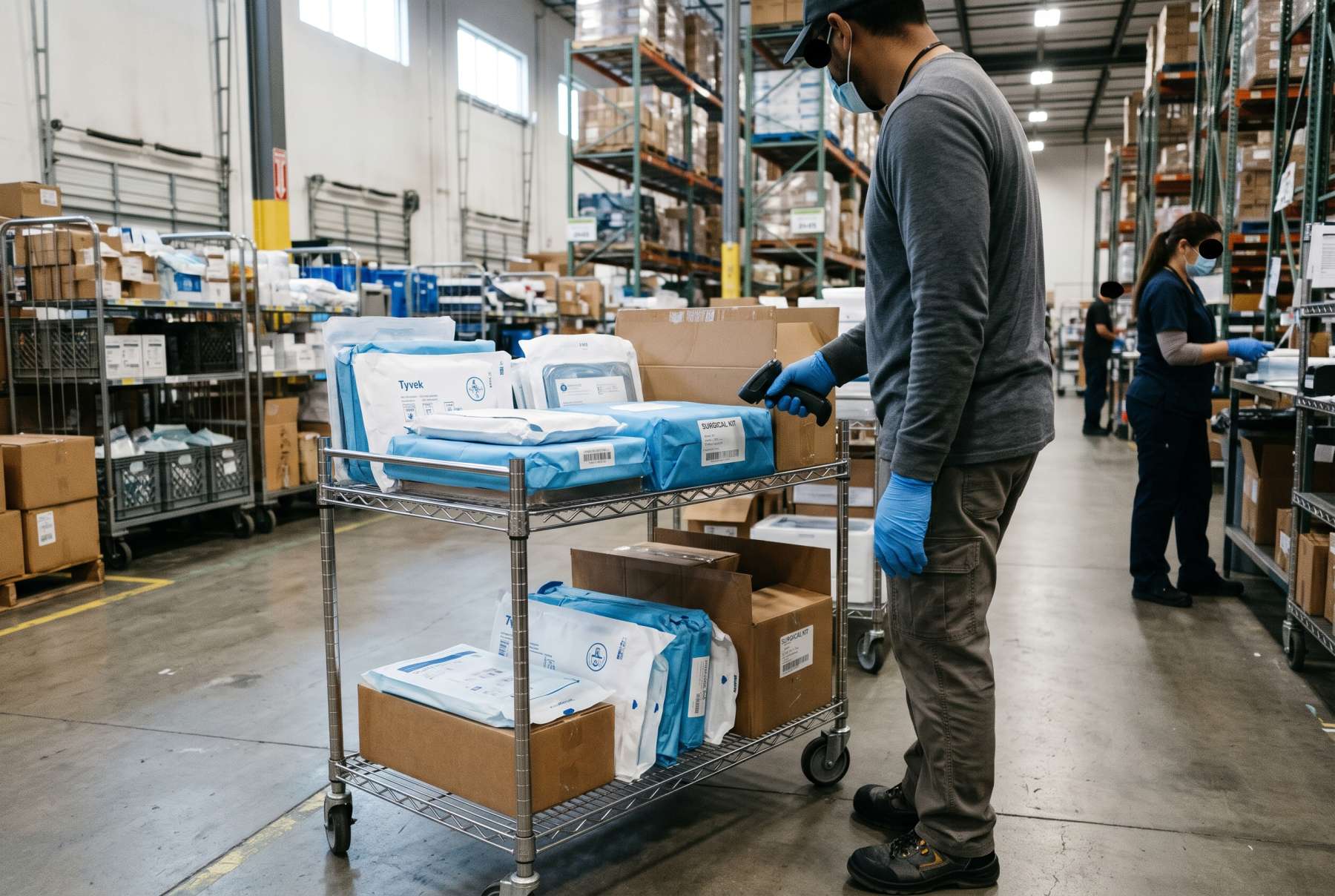
A recall notice creates a familiar response pattern. Someone opens the message, searches a spreadsheet, calls a distributor, asks a field representative to check a vehicle, and starts building a list of places where the affected product might be.
That process feels like recall management because it produces activity. It does not necessarily produce control.
A recent FDA-posted recall involving Medline convenience kits illustrates the problem. The affected kits were classified under the general surgery tray product category, and the notice was posted on November 10, 2026. The products were distributed through procedure-specific kits, which means the operational question was not simply whether a facility had received a recalled component. The harder question was which assembled kits, trays, storage locations, customer sites, or procedure workflows still contained it. The FDA recall record documents the product and kit information. (accessdata.fda.gov)
That distinction matters for every organization moving surgical inventory. A recall is not only a regulatory event. It is a race to establish the current physical state of each affected asset before the next case, shipment, sterilization cycle, or handoff changes the picture.
The list is not the location
Most recall workflows begin with a product list. The list may include a catalog number, lot number, expiration date, kit configuration, or customer account. Those identifiers are essential, but they are only the starting point. They describe what should be found. They do not tell the team where the item is now.
In a distributed surgical network, the same inventory can move through a manufacturer warehouse, a 3PL, a distributor branch, a hospital receiving dock, sterile processing, an operating room, an ASC storage area, or a representative's vehicle. A loaner set can be in transit while the system still shows it assigned to a customer. A kit can be physically present but already opened, partially used, or placed into a processing queue. Another can be sitting in a return area waiting for inspection.
Each of those states changes the response. A kit in a locked quarantine cage is different from a kit in a sterile processing department. A set already delivered to an operating room requires a different conversation from one still on a warehouse shelf. An asset at a 3PL may need a hold instruction, while an asset at an ASC may require coordination with the clinical and scheduling teams.
This is why a spreadsheet export can create a false sense of progress. It can show who was shipped what. It cannot reliably show where the asset crossed its last operational boundary, whether that handoff occurred, or whether the kit is still in the condition assumed by the record.
Correction work exposes the handoff problem
Recent FDA reporting has repeatedly shown how device corrections can involve procedure trays, convenience kits, and products assembled from components made by different companies. In September 2026, the FDA reported a correction involving Medline kits affected by a BD ChloraPrep applicator recall. The issue was not limited to a single loose item on a shelf. It involved products incorporated into kits that had already entered a broader supply chain. The FDA communication shows how a component-level problem can become a kit-level action. (fda.gov)
That is where handoffs become the weak point. Manufacturers may know what they shipped. Distributors may know what they received. Hospitals may know what arrived at the dock. Sterile processing may know what entered decontamination. The field representative may know which set was used for a case. But unless those views connect to the same asset record, each group is working from a partial history.
The result is predictable. Operations teams over-quarantine unaffected inventory because they cannot separate the known from the uncertain. They spend hours asking for photos, delivery confirmations, and manual counts. Field staff drive to sites to inspect equipment that may already have moved. Clinical teams receive a late answer about whether a needed kit can be released. A recall that should have been a controlled hold becomes an emergency inventory exercise.
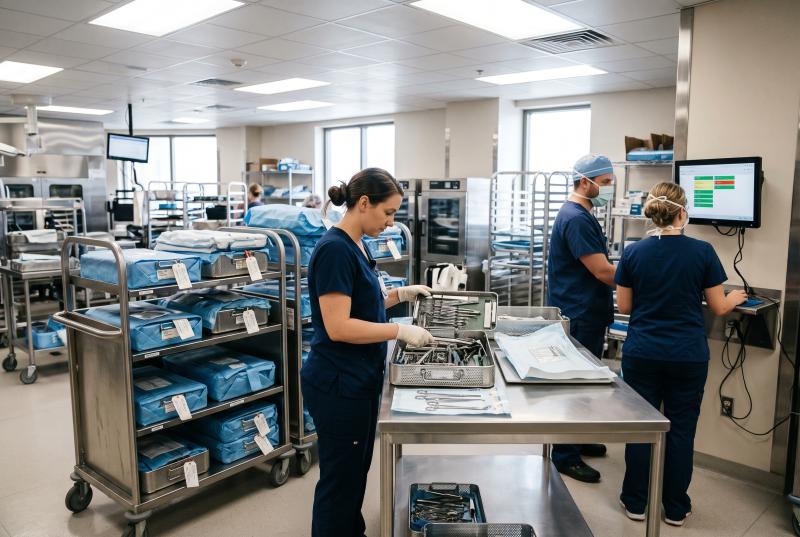
The same issue appears in sterile processing, even when the event is not formally labeled a recall. A tray can enter decontamination, move through inspection, and return to storage while the administrative record still treats it as simply “available.” AORN guidance on loaned instruments emphasizes the need to manage loaner trays through delivery, processing, and return workflows, not as anonymous items passing through the department. AORN's sample policy for loaned instruments reflects the operational importance of those transitions. (aorn.org)
Visibility changes the first hour
The value of asset visibility during a recall is not that it eliminates every manual step. Some actions still require physical inspection, lot verification, documentation review, or a clinical decision. The value is that the team can start with a narrower and more credible search.
For a hospital or ASC, that means identifying which trays and kits are on site, which are in sterile processing, which are assigned to upcoming cases, and which have already moved out through returns or transfers. For a distributor or 3PL, it means seeing which assets remain in a facility, which are moving between nodes, and which customer records need confirmation. For a manufacturer, it means reducing the gap between the distribution record and the physical position of the set.
That shared picture also makes the response more proportional. If 40 kits are in a warehouse and 6 are at customer sites, the teams do not need to treat every location as equally uncertain. If a tray is already in a processing area, it can be held before release. If it is assigned to a case tomorrow, scheduling and clinical operations can address the risk before the patient arrives. If it is moving through a return route, the shipment can be intercepted or redirected.
Real-time tracking is useful here because it replaces the question “Who last touched this?” with a more operational question: “Where is the asset now, and what should happen next?” The difference is substantial. The first question produces a phone tree. The second supports a decision.
It also creates value outside the recall itself. The same visibility can show how long a tray remains at a handoff, whether loaner sets are routinely stranded after a case, and whether an asset marked available is actually moving toward the next procedure. That is the business case for treating tracking as part of the operating model rather than as a special compliance project.
The defensible record is built before the event
When the notice arrives, it is too late to begin designing the location workflow. Teams need to know in advance what counts as a handoff, which locations matter, who can quarantine an asset, and how a set moves from hold to release. They also need a reliable way to distinguish a current location from an old assignment.
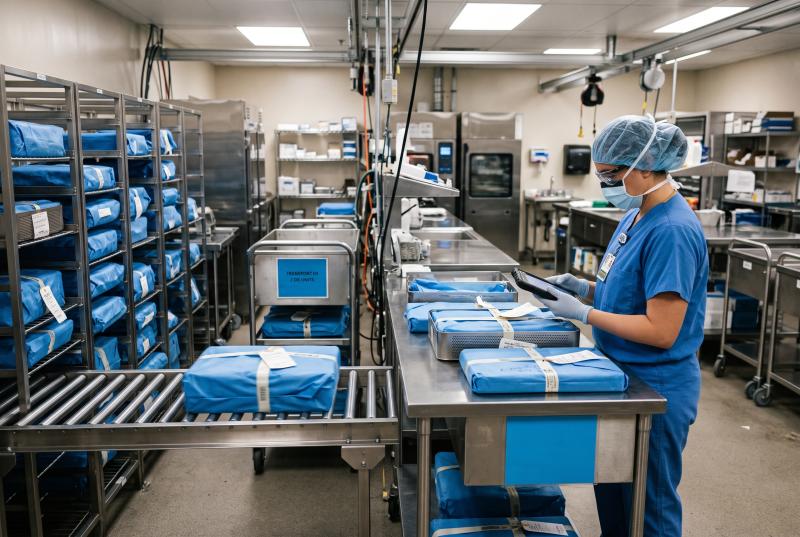
For surgical trays and loan sets, the record should follow the asset through the places where visibility is most likely to disappear: the warehouse, the hospital receiving area, the ASC, sterile processing, the operating room, the return route, and the field team. Tags that remain with the asset through sterilization are important because visibility that ends at decontamination is not continuous visibility. Neither is a barcode that depends on someone remembering to scan it at every transition.
The recent recall activity is a reminder that the physical supply chain has become more complicated than the product master. Kits contain components. Trays move between organizations. Procedure schedules change. A component problem can affect a finished configuration that is no longer sitting where the original shipping record says it should be.
The strongest recall response therefore begins long before the recall letter. It begins with knowing the current location of the asset, the last meaningful handoff, and whether the next action is to quarantine, inspect, return, replace, or release. When that information is available, compliance teams can move quickly without asking the field to recreate the past from memory.
The sharper operational question is not whether the organization can produce a list. It is whether the organization can turn that list into a physical action before the next tray moves.
Frequently asked questions
Can asset tracking tell us where an affected tray or kit is during a recall?
Hansel provides a real-time view of surgical trays and loan sets, helping teams identify whether an asset is at a warehouse, customer site, or another operational location. That narrows the physical search, while teams still complete any required inspection, lot verification, or clinical review.
How does this help when a recalled component is inside a convenience kit?
A component-level issue can affect an assembled kit that no longer matches the original shipping record. Tracking the tray or kit as an asset gives manufacturers, distributors, 3PLs, and hospitals a shared view of which configurations need follow-up and where they are currently recorded.
Does visibility continue through sterile processing and other handoffs?
The article's central issue is that location records become less reliable as trays move through receiving, sterile processing, operating rooms, returns, and field teams. A tracking program is most useful when those operational transitions are captured consistently, so the team is not relying on old assignments or memory during a recall.
Can this support decisions about upcoming procedures involving affected inventory?
Hansel's case scheduling capabilities connect upcoming procedures with required trays and inventory readiness. That can help teams identify whether a potentially affected set is associated with an upcoming case before the case team discovers the problem at the point of use.
How can a distributor or 3PL prove what happened to an asset after shipment?
Real-time tray and loan-set tracking gives operations teams a more current record of asset movement and availability than a shipment list alone. Hansel's inventory auditing capabilities can also help teams review what they have and support a more defensible account of where an asset was recorded during the response.
Is the value limited to recall response, or does tracking help between events?
The same visibility can expose assets that remain unavailable, spend too long at a handoff, or are marked available without being ready for the next procedure. Hansel also provides utilization and business insights on movement, availability, and asset use, extending the value beyond a single compliance event.