Operations 18 November 2026
Dwell Time Is Becoming the Hidden Tax on Surgical Trays
As hospital supply costs rise, the next inventory question is not what a network owns. It is how long each tray sits between decontamination, dispatch, and the next case.
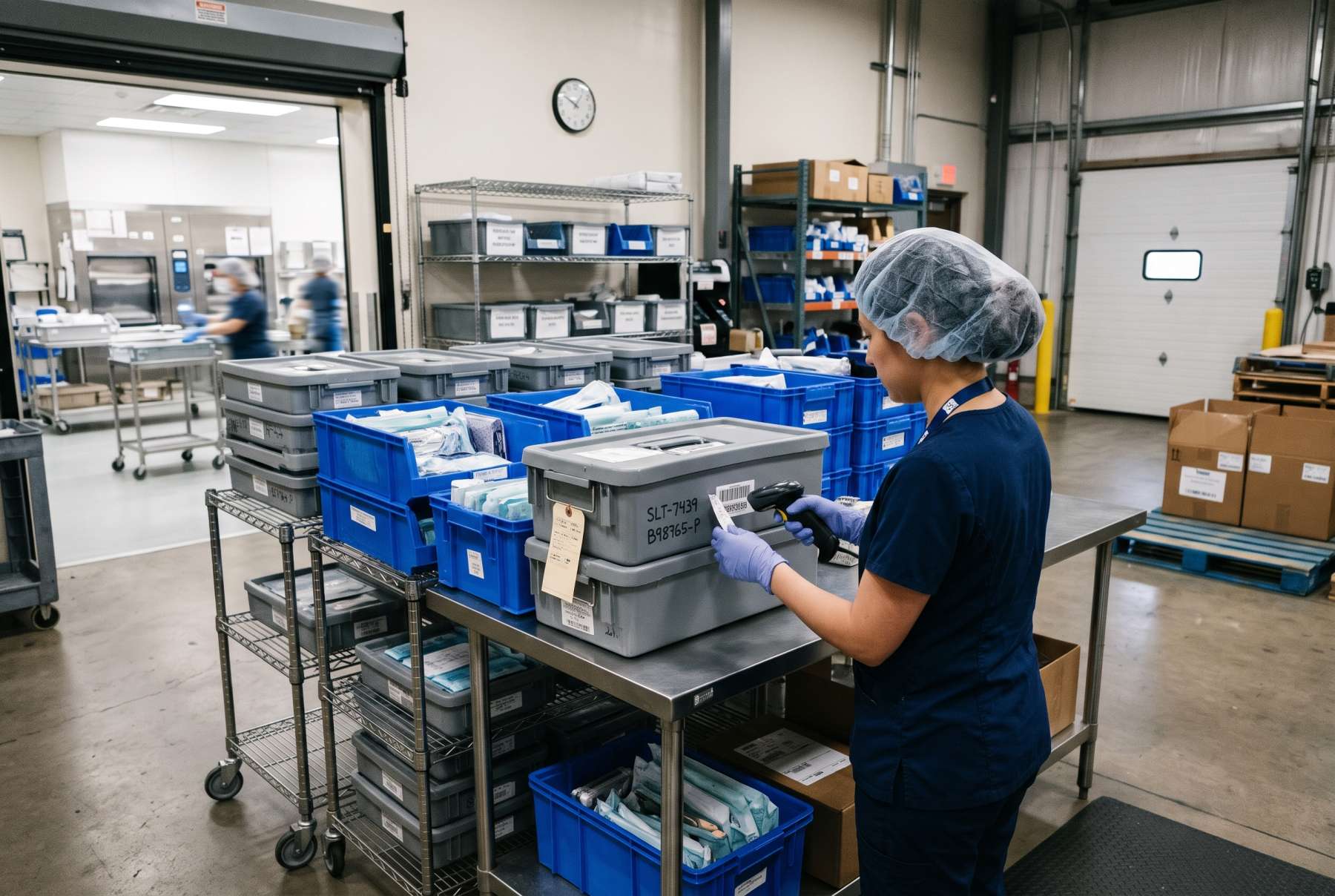
The next surgical tray problem may not be a shortage, a late courier, or an incorrect preference card. It may be the tray that spends two days doing nothing while everyone still considers it part of the available network.
That idle time is easy to miss because most inventory reports measure ownership or last known location. They do not always show the gap between decontamination and dispatch, between a 3PL handoff and hospital receipt, or between a case cancellation and the tray's next assignment. In a network built around loaner sets, those gaps are where capacity disappears.
The pressure is becoming harder to ignore. In August, Becker's Hospital Review reported that hospital supply leaders were seeing sharper cost increases in surgical supplies, capital equipment, and technology-enabled products than in other categories. The same report cited an updated Vizient forecast of 2.78% supply chain inflation for the period from July 2026 through June 2027.
That does not mean every tray needs to be cut from the network. It means the operating question has changed. Before adding another set, leaders need to know whether the sets already in circulation are being used, being processed, or simply waiting in a place nobody can see.
The inventory tax starts before anyone calls it a delay
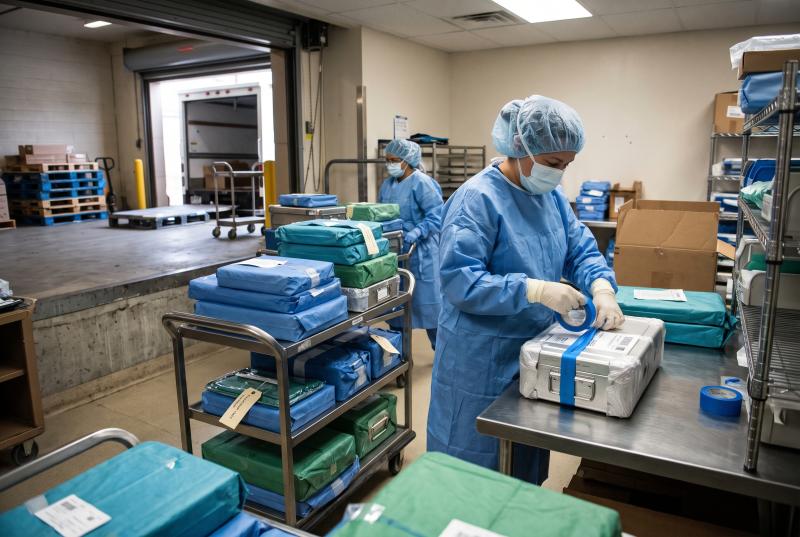
A tray can be physically present and operationally unavailable. It may be sitting in a decontamination queue, waiting for inspection, staged for a case that moved, packed for a facility that no longer needs it, or placed on a truck without a confirmed receiving window. Each state is different. A basic inventory count often treats them as the same.
That distinction matters most for loaner sets and implant-related inventory. The set may belong to a manufacturer or distributor, but the hospital still depends on it for a scheduled procedure. If the tray is not visible after it leaves the operating room, the next team has to reconstruct its status through calls, texts, spreadsheets, and memory.
That reconstruction creates a familiar chain of work. A field representative checks the trunk. A warehouse coordinator searches outbound records. Sterile processing checks whether the tray arrived back from the previous case. The OR calls again because the case is approaching. Nobody is necessarily ignoring the process. The process simply has too many places where the asset can become invisible.
The cost is not limited to labor. An unseen tray can trigger an unnecessary replacement order, an emergency shipment, a duplicate loaner request, or an avoidable schedule change. It can also make the network look smaller than it is. Leaders see a readiness gap and respond by acquiring or borrowing more inventory, while the actual problem is that existing inventory is spending too much time between states.
Regulatory visibility is not the same as operational visibility
The Food and Drug Administration's device shortage program shows why medical device organizations are paying closer attention to supply continuity. The FDA's Medical Device Shortages List, updated October 26, 2026, tracks device categories affected by shortages and discontinuances. The list is useful for understanding market risk, but it does not tell a hospital which individual tray is at the 3PL, which one is in sterile processing, or which one is already committed to tomorrow's case.
That distinction is important. A shortage alert changes the value of every available asset, but it does not create visibility into those assets. When supply is constrained, the operational answer cannot be limited to finding an alternate product code. Teams also need to know where the current sets are, how long they have been in place, and whether they can realistically move to the next case.
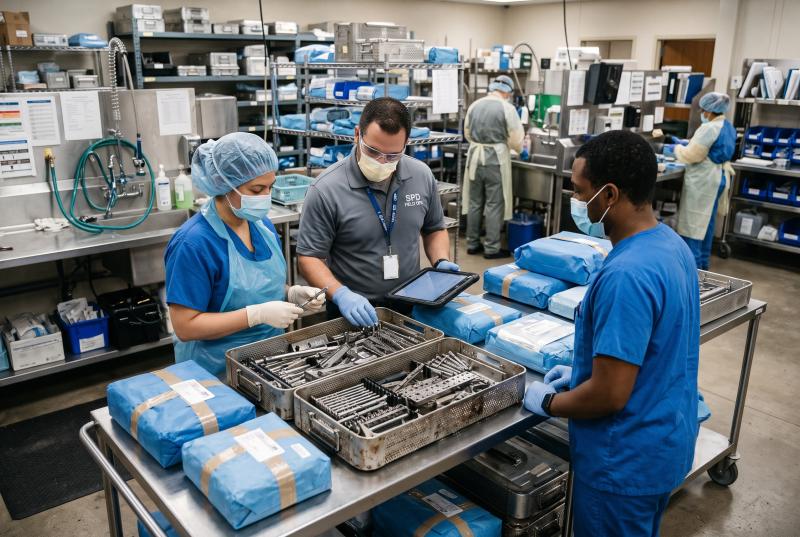
The same principle appears in sterile processing guidance. AORN's materials on loaned instrument turnover emphasize the work required when loaned items enter a facility, including decontamination, inspection, assembly, packaging, and documentation. Each step creates a possible custody gap. A record that says a tray was received is not enough if the next question is whether it has been processed, released, staged, and matched to the correct case.
This is where many organizations confuse compliance documentation with readiness control. A completed form can prove that a handoff was recorded. It does not necessarily show that the asset is moving through the network at the speed the schedule requires.
Measure the time between milestones, not just the milestones
The practical fix begins with a different set of questions. How long did the tray remain in decontamination before inspection? How long did it sit after processing before dispatch? How long between carrier delivery and hospital receipt? How long after a case cancellation before the set was reassigned or returned?
Those are dwell-time questions. They turn a vague complaint about slow turnaround into a measurable operating pattern.
A distributor might discover that a tray is spending more time staged for pickup than in transit. A 3PL might find that a set arrives at a hospital but waits for internal routing before sterile processing receives it. A health system might learn that trays assigned to cancelled cases remain unavailable until someone notices the schedule change manually. Each finding points to a different intervention.
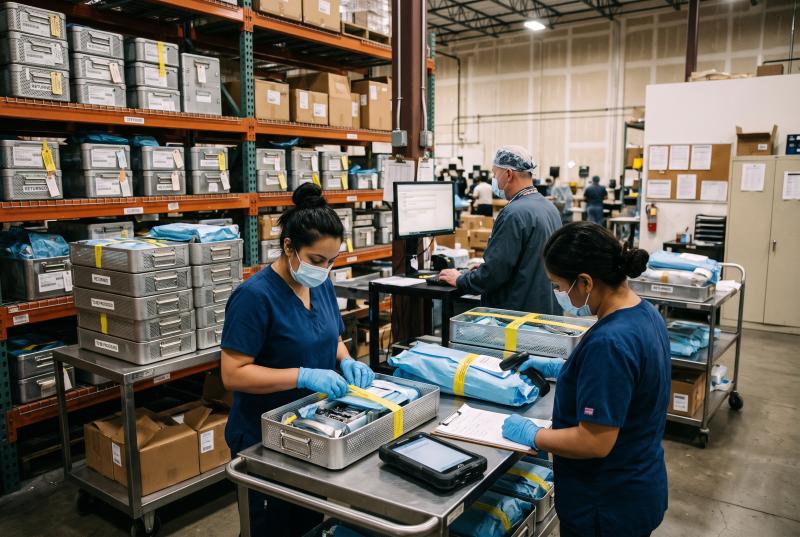
The important part is that the measurement follows the asset, not just the order. A shipment status can say delivered while the tray is still outside the department that needs to process it. A sterile processing status can say complete while the set is waiting for a courier. A case schedule can say confirmed while the required tray is still moving between facilities.
That is why automated asset visibility is more useful than another manual search routine. A tag that stays with the tray through sterilization gives operations, field teams, sterile processing, and clinical staff a shared picture of the asset's location. The value is not the map by itself. The value is being able to distinguish a tray that is ready, a tray that is moving, and a tray that has stopped progressing.
Those distinctions also support better exception rules. A tray that remains in one location past a normal processing window should be reviewed before it becomes a same-day escalation. A set that misses a dispatch milestone should surface before the OR discovers the problem. A cancelled case should release its assigned inventory into a visible reassignment workflow instead of leaving the set attached to an outdated plan.
The next savings decision is about time in the network
Supply inflation will keep pushing leaders to examine what they buy. That is necessary, but it is not sufficient for surgical inventory. The more useful question is what each asset costs the network while it is unavailable, unassigned, or waiting for someone to locate it.
Per-asset economics become clearer when the organization can see movement and nonmovement together. A tray that supports frequent cases may justify its place even if it travels constantly. A tray that appears to be needed but spends most of the month stranded in an unconfirmed location may be a routing problem, a scheduling problem, or a poor ownership decision. Without movement data, those situations look identical.
The field lesson is simple: do not treat dwell time as empty space between operational events. It is an event. It consumes capacity, creates uncertainty, and can force the network to carry more inventory than the case volume actually requires.
When the next tray is requested, the best answer may not be another tray. It may be a clearer view of the ones already moving through the system, the ones waiting between handoffs, and the ones that should have been available hours ago.
Frequently asked questions
How should we measure dwell time for surgical trays?
Track the time between meaningful milestones, such as decontamination, processing, dispatch, delivery, receipt, and reassignment after a cancelled case. The goal is to separate a tray that is ready or moving from one that has stopped progressing in the network.
Can a tray be physically present but still unavailable for the next case?
Yes. A tray may be staged, waiting for processing, assigned to a cancelled case, or sitting between a carrier handoff and hospital receipt. Treating all physically present inventory as available can make the network appear ready when the asset cannot realistically support the next procedure.
What visibility do distributors and 3PLs need beyond shipment status?
They need to know where each tray or loan set is and whether it is moving toward the next case. Hansel provides real-time tracking for surgical trays and loan sets, helping teams distinguish assets that are available, in motion, or delayed instead of relying on calls, spreadsheets, and memory.
How can case scheduling help expose inventory that is tied up unnecessarily?
Case scheduling connects upcoming procedures with the trays they require and the inventory's readiness. That can make it easier to identify a set still attached to a changed or cancelled case before the delay becomes an operating room escalation.
How do we know whether to buy another tray or improve current utilization?
Compare movement, availability, and usage at the asset level before adding inventory. Hansel's utilization and business insights support that review by showing how trays and loan sets are moving and being used, which can help separate a true capacity gap from a routing or dwell-time problem.
},{