Compliance 20 November 2026
A Tray Can Be Ready and Still Be Wrong
A 2026 FDA correction involving 544 surgical trays shows why sterile processing needs exception history, not just a green ready status.
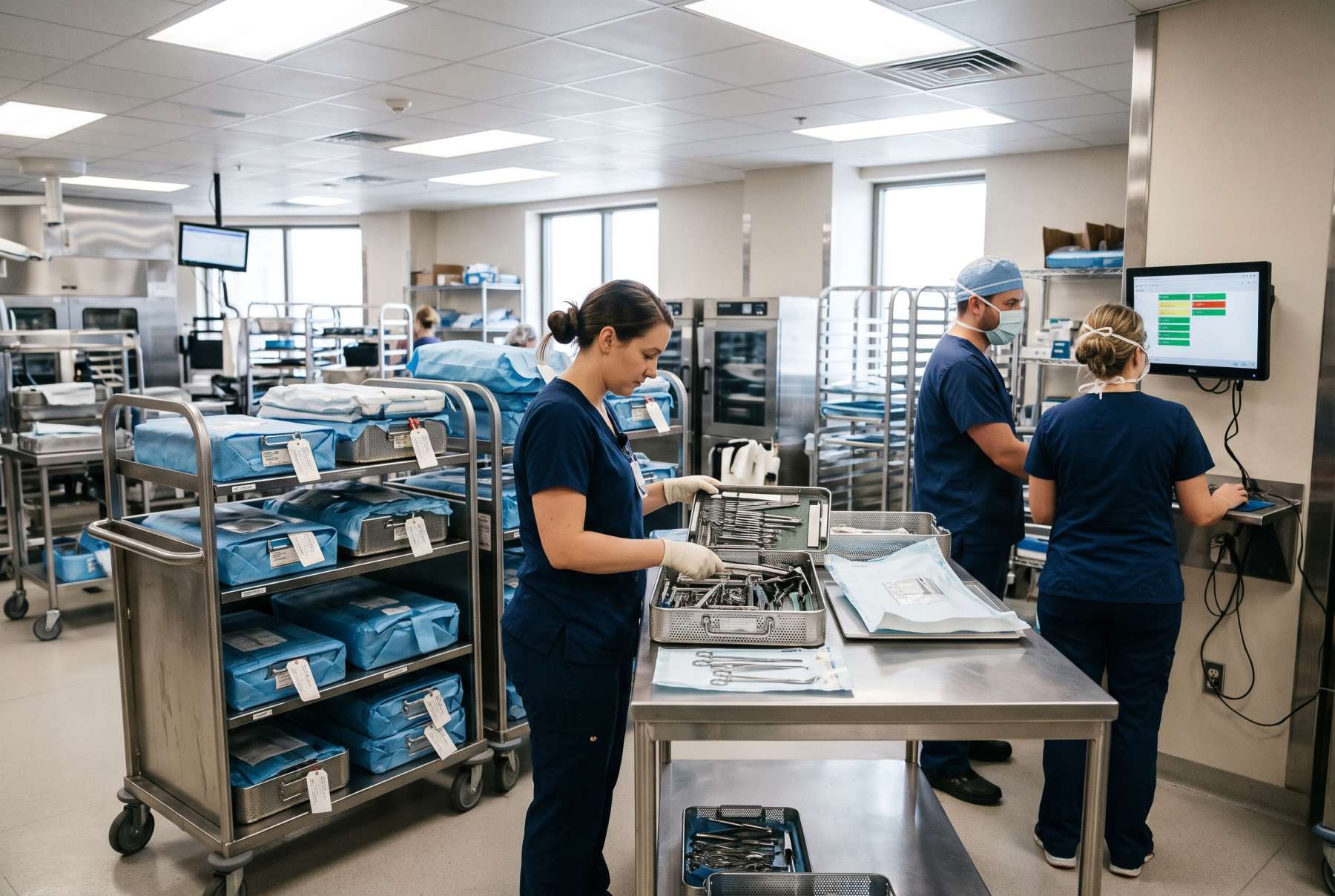
A surgical tray can be physically present, wrapped, and marked ready for use, yet still carry an unresolved operational question: ready under which instructions, at which facility, and after which exception?
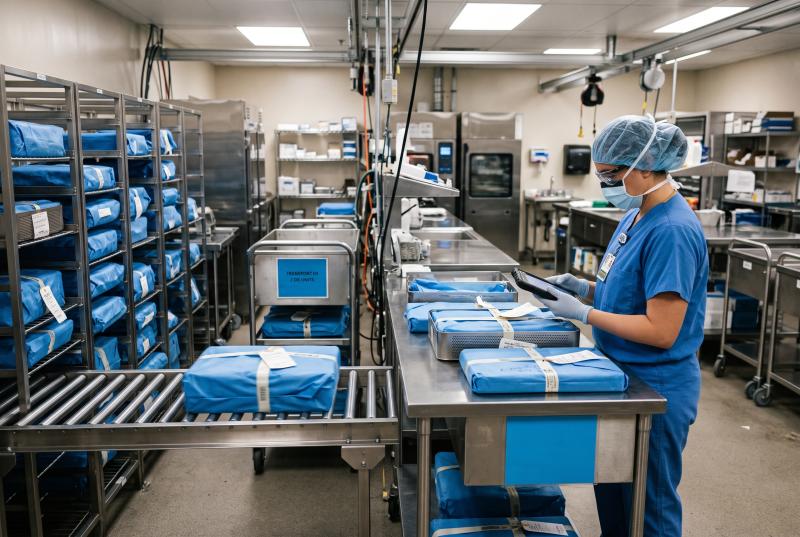
That question moved from theory to practice in a recent FDA recall posting involving 544 Stryker TS Miscellaneous Instruments Trays. The correction concerned the required dry time when the trays were sterilized in blue wrap. The instructions called for 30 minutes, but the corrected requirement was 40 minutes because the shorter cycle could leave residual moisture. The recall was initiated on September 16, 2026, and posted by the FDA on October 15, 2026. The FDA recall record describes the action as open and classified.
The point is not that one manufacturer made one labeling error. The operational point is that a tray's status can change without the tray changing location. A set can be in the right building, in the right department, and still require review before a case. If the system records only “ready” or “not ready,” the most important part of the story disappears.
Readiness is a chain of conditions, not a label
In the field, readiness often gets treated as a final state. A tray is either available for the case or it is not. That is understandable under pressure. The schedule needs an answer, the OR needs an answer, and the rep or distributor needs an answer they can act on.
But reusable devices do not become ready in one step. They move through receipt, inspection, decontamination, assembly, sterilization, cooling, storage, dispatch, transport, and case use. A change to one instruction can reopen an earlier decision. A tray that passed through sterilization yesterday may need to be located, identified, and reviewed today if the manufacturer changes the processing requirement.
This is where a simple inventory count becomes inadequate. “We have 12 trays” does not tell the perioperative team whether 12 are cleared, whether 2 are at an outside hospital, whether 3 are waiting for reprocessing, or whether one of the 12 falls inside a correction notice that requires action. The quantity is not false. It is just incomplete.
The AORN sample policy for loaned instruments treats loaner instrumentation as a workflow that requires coordination between the vendor, the sterile processing department, and the clinical team. That coordination becomes harder when custody and processing history live in separate spreadsheets, emails, and phone calls.
The correction involving the 544 trays makes the gap visible. The operational question is not only “Where are the affected trays?” It is also “Which trays were processed under the old instruction, where are they now, and who has confirmed the next action?” Those are different questions, and they require different records.
The exception is often more valuable than the status
Most systems are designed to report the normal path. A tray is received, cleaned, sterilized, returned to stock, and sent to the hospital. That path is easy to describe and easy to put into a report.
The costly work begins when the path breaks. A set is held for a wet pack. A case moves forward by 2 days. A manufacturer sends revised instructions. A 3PL receives a kit without the expected contents. A tray is sent to the wrong facility and then forwarded without a clean handoff. A rep says the kit is “on the way,” but nobody can say whether it has left the warehouse or arrived at the loading dock.
Those are exceptions, but they are not edge cases in a network built around loaners and shared inventory. They are the moments when a status field stops being enough.
A stronger operational record preserves the event that changed the status. It can show that a tray was placed on hold, that a correction was attached to the asset, that a reprocessing review was required, or that the tray was cleared after the updated instructions were followed. That history matters for compliance, but it also matters for the next person who has to make a scheduling decision without being in the room.
For field teams, the distinction is practical. A rep may know that a tray was shipped. The hospital may know that a tray was received. Sterile processing may know that the tray is waiting for inspection. All 3 statements can be true at once, while the case is still not ready. A shared, live view of the asset reduces the need to reconcile those statements by phone.
That does not replace the manufacturer's instructions or the sterile processing department's judgment. It does make the judgment easier to apply because the team can identify the affected asset, its current location, and its next required action without searching across disconnected records.
Corrections expose the cost of a binary dashboard
The FDA's medical device shortage program is built around visibility into disruptions, discontinuances, and supply risks. Its Medical Device Shortages List, updated October 26, 2026, is meant to provide current public information about device categories affected by shortage or discontinuance activity.
That kind of visibility is useful at the market level. But a hospital, distributor, or manufacturer still has to answer the asset-level question: what happened to the specific tray or kit in our network?
A public notice can identify a device type, a manufacturer, a lot, or a corrective action. It cannot tell an operating room whether its set is in sterile processing, in a hospital truck, at a 3PL, or sitting in a rep's local inventory. That last mile belongs to the operating model.
This is why automated tracking has value beyond finding a missing tray. When a tray carries a persistent tag through warehouse, hospital, and sterile processing locations, visibility does not have to stop at the point where someone scans a barcode or updates a spreadsheet. Teams can see where the asset is before deciding whether it can support the next case. The same record can support inventory audits, case planning, and a correction response without requiring every person in the chain to maintain a separate version.
The economics are also more direct than they first appear. During a correction, the cost is not only the replacement instrument or the extra freight. It is the staff time spent identifying affected sets, the calls made to confirm receipt, the cases held while a tray's status is disputed, and the idle inventory that cannot be confidently assigned. If a team cannot distinguish “not found” from “found and on hold,” it may order or ship another set unnecessarily.
The better question for an operations lead is not whether the dashboard has a green status. It is whether the organization can explain the path to that status. Can someone see the last known location, the last meaningful handoff, the exception that interrupted the normal workflow, and the action that cleared it?
That is the lesson in the FDA's tray correction. Readiness is not a permanent attribute attached to an instrument set. It is a conclusion supported by movement, processing, documentation, and timing. When one of those conditions changes, the system has to preserve the change instead of quietly leaving the old status in place.
A tray that is ready is useful. A tray whose readiness can be verified is operationally reliable. In a network where the same set may move between a manufacturer, 3PL, hospital, ASC, and sterile processing department in the same week, that difference is where compliance becomes daily work rather than a binder on a shelf.