A shortage notice can arrive with enough information to trigger concern and not enough information to protect the next case.
The market may know that a device category is constrained, that a manufacturer has reported an interruption, or that an estimated shortage now extends into 2027. The hospital, ASC, distributor, or 3PL still has to answer a more practical question: which usable set is available for this specific procedure, at this specific location, on this specific date?
That is the gap between shortage awareness and case readiness. It is also where many shortage playbooks become a collection of phone calls, spreadsheet updates, and increasingly urgent requests for someone to check the dock.
The FDA Medical Device Shortages List was updated June 16, 2026, with several device categories carrying estimated shortage durations into the first quarter of 2027. The list is important market information. It is not an operating picture of every affected tray, loan set, implant tote, or substitute kit moving through a US healthcare network. (fda.gov)
Availability is only the first decision
Shortage conversations often begin with a procurement question: can we get the item?
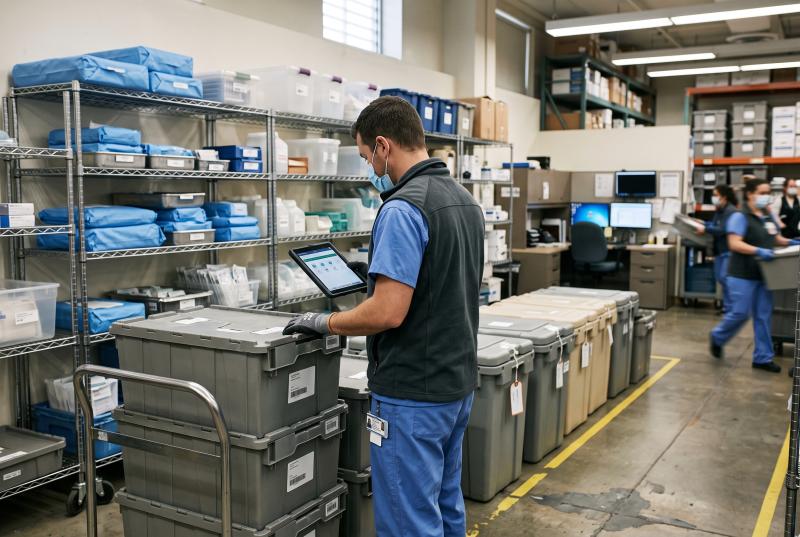
That question matters, but it is too early in the chain to guide a case. A device can be available at a manufacturer and still be unavailable to the operating room. It can be allocated to a distributor but not yet received. It can be sitting in a 3PL warehouse without the accessory that makes the kit usable. It can be at the hospital but waiting for decontamination, inspection, sterilization, or a missing implant count.
In other words, “available” is not one state. It is a sequence of states that different teams own:
- The manufacturer confirms what can ship.
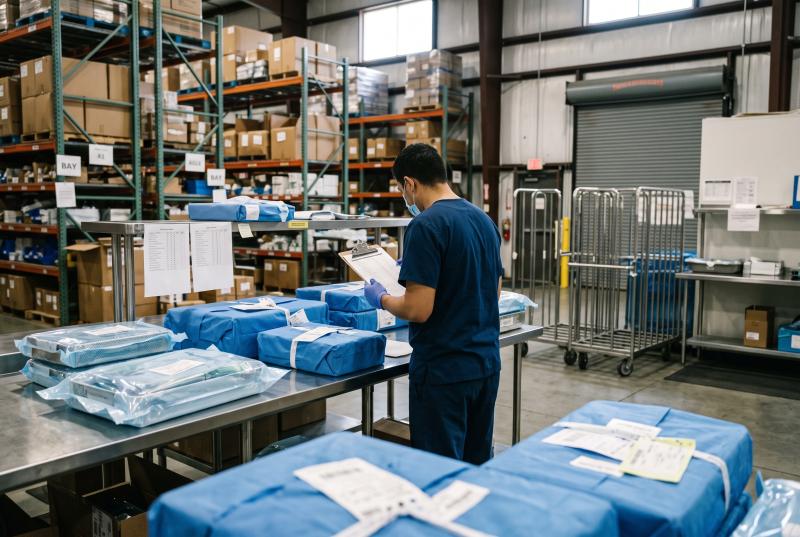
- The distributor or 3PL confirms what was received and where it was staged.
- The field team confirms what was assigned to a customer or case.
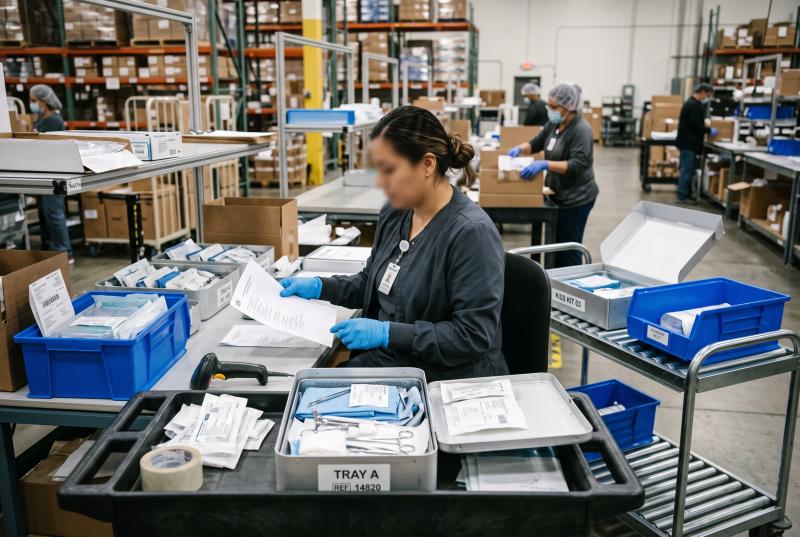
- Sterile processing confirms what can be processed and released.
- The clinical or scheduling team confirms that the actual case has the required set and contents.
When those states live in separate systems, the shortage response becomes a reconciliation exercise. Someone compares an allocation email with a warehouse list. Someone else checks a tray label against a preference card. A rep texts a hospital contact. The schedule changes while the answer is still being assembled.
That is why a shortage playbook needs a readiness clock, not only a supply alert. The useful measure is not simply how long a product has been listed as constrained. It is how long it takes to move from shortage notice to a verified answer about the next case.
The substitute kit creates a second visibility problem
Substitution is often treated as a purchasing solution. If the preferred set is unavailable, the team finds another set that can support the procedure. In practice, the substitute introduces its own operational questions.
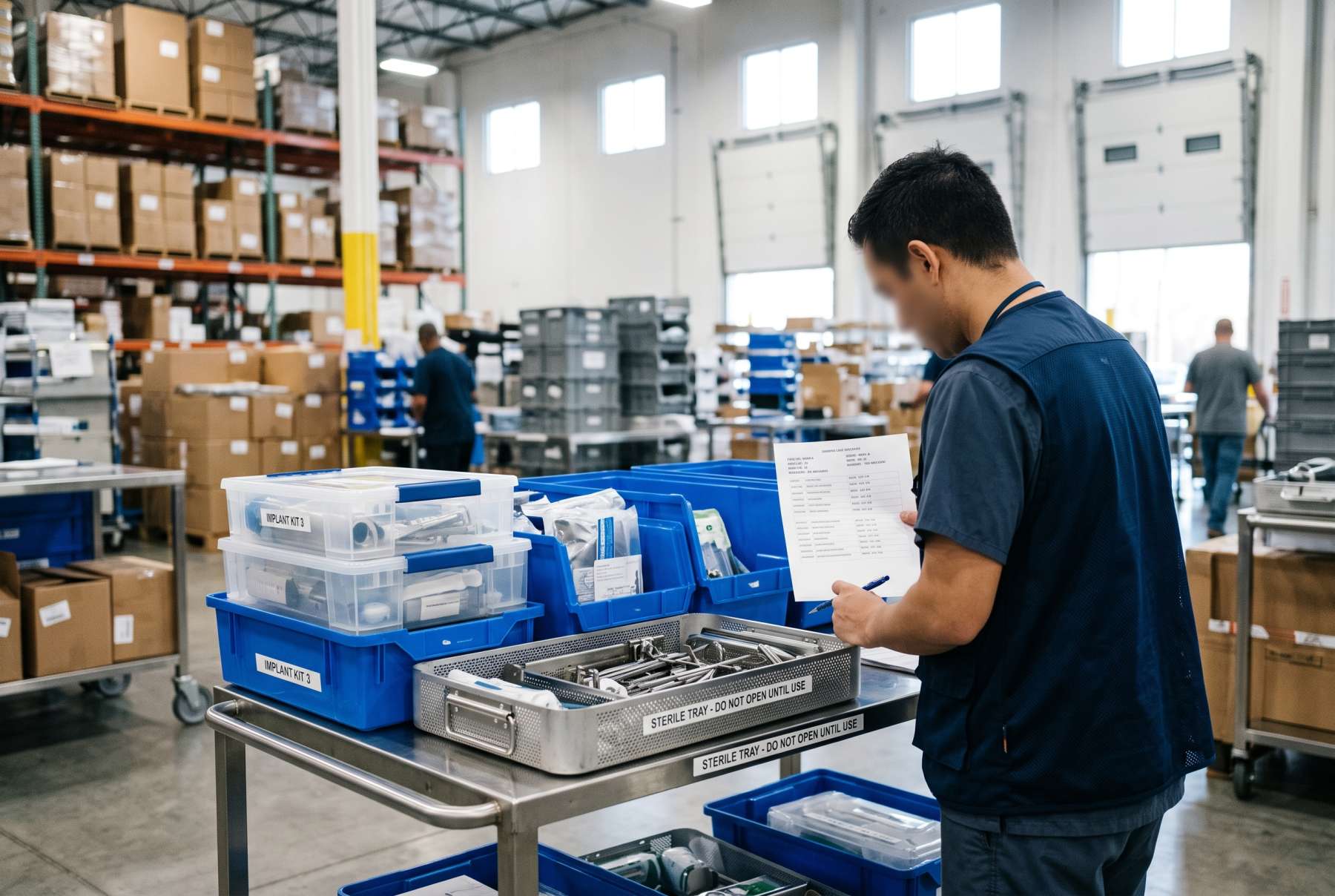
Is the substitute kit at the right hospital or still in transit? Does it contain every required instrument? Is the implant inventory compatible with the planned procedure? Has the kit been through the required sterilization cycle? Is it committed to another case in the same IDN? Does the field rep know which asset replaced the original request?
A spreadsheet can record that a substitute exists. It is much less reliable at showing whether the substitute moved, whether its contents changed, or whether the replacement is now tied to a different case. The record may say “ready” because a box was assigned, while the tray is still in a decontamination area or missing a critical component.
This is where physical asset visibility and inventory visibility have to meet. The location of the tray answers one question. The contents of the kit answer another. Neither is enough by itself.
For a manufacturer or distributor, the operational object is not just the product code. It is the named tray, loan set, or implant tote moving through warehouses, hospitals, ASCs, and sterile processing. A tag that stays with the asset through sterilization keeps the location history attached to the thing the case actually needs. A named inventory record can then show what is packed, missing, or used.
The point is not to create another dashboard for the shortage meeting. The point is to eliminate the time between “we found an alternative” and “we verified that alternative can support this case.”
The schedule needs a readiness state, not a confidence call
Case schedules are built around dates and procedure times. Shortage operations are built around uncertainty. The two systems often meet only when someone realizes that a case is tomorrow and the required set has not been confirmed.
That late handoff is expensive because every team begins solving the same problem at once. The scheduler asks the rep. The rep asks the warehouse. The warehouse checks the last scan. Sterile processing checks whether the tray was released. The surgeon's office asks whether the case is still on. By then, the organization is not managing a shortage. It is managing the consequences of not knowing.
A better operating view places the case, the required assets, and the open work in the same picture. The case can show that a tray is missing, that an implant count has not been verified, or that a stage is held pending a required item. The warehouse and field team can see the same operational status rather than maintaining separate versions of the truth.
This does not mean every case needs a complex workflow. It means the team needs a clear distinction between assigned, moving, received, processed, complete, and ready. Those states should be tied to the asset and the case, not inferred from a phone call or a stale spreadsheet row.
CMS's FY 2027 inpatient payment rule was published in August 2026, while the CY 2027 outpatient and ASC payment rule remains part of the operating environment hospitals and ASCs are planning around. That broader payment pressure makes avoidable case disruption harder to absorb, especially when organizations are already trying to move appropriate procedures into outpatient settings. ([cms.gov](https://www.cms.gov/medicare/payment/prospective-payment-systems/acute-inpatient-pps/fy-2027-ipps-final-rule-home-page
Recent US reports also show that surgical delays can come from several connected failures, including sterilization problems, blood product shortages, cyber incidents, and anesthesia staffing gaps. The lesson is not that every delay is an inventory problem. The lesson is that readiness is a chain, and the weakest unverified link can change the schedule. ([beckersasc.com](https://www.beckersasc.com/asc-news/why-5-hospitals-health-systems-delayed-surgeries-in-2026/
Measure the time the operation can actually control
Manufacturers cannot control every shortage duration. Hospitals cannot manufacture a missing component. A 3PL cannot make an allocation larger than the inventory it receives.
They can control how quickly they establish a shared, trustworthy answer.
That answer should include at least four facts: what asset is being used, where it is now, what usable contents are present, and which case or customer owns the next decision. If one of those facts is missing, “ready” is still a judgment call.
The most useful shortage metrics therefore sit close to the work:
- Time from shortage notice to identified substitute.
- Time from substitute assignment to verified physical location.
- Time from receipt to confirmed contents.
- Time from confirmed contents to case-ready status.
- Number of cases changed because the organization could not verify the set in time.
Those measures also reveal where the real bottleneck sits. If substitute kits are found quickly but sit unprocessed, the problem is not procurement. If kits are processed but cannot be located after release, the problem is not sterilization. If the physical set is ready but the schedule still shows an old assignment, the problem is the handoff between operations and scheduling.
A shortage notice is a signal. Case readiness is a verified operational state. The organizations that handle constrained supply best will be the ones that stop treating those as the same thing.
The sharper question is not, “Do we have inventory?” It is, “Can we prove that the right usable asset is in the right place for the next case?”