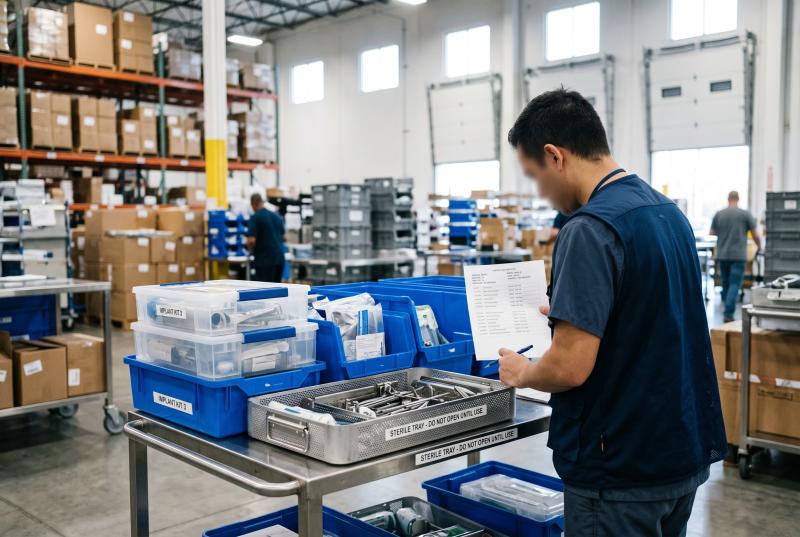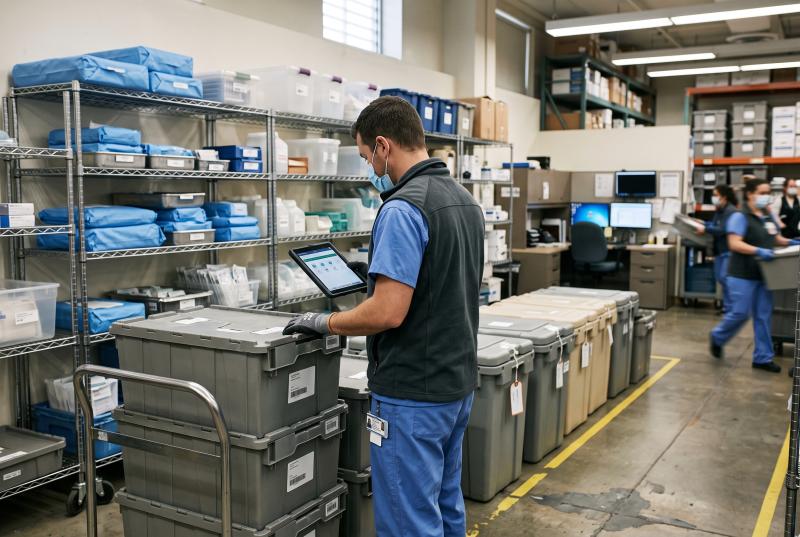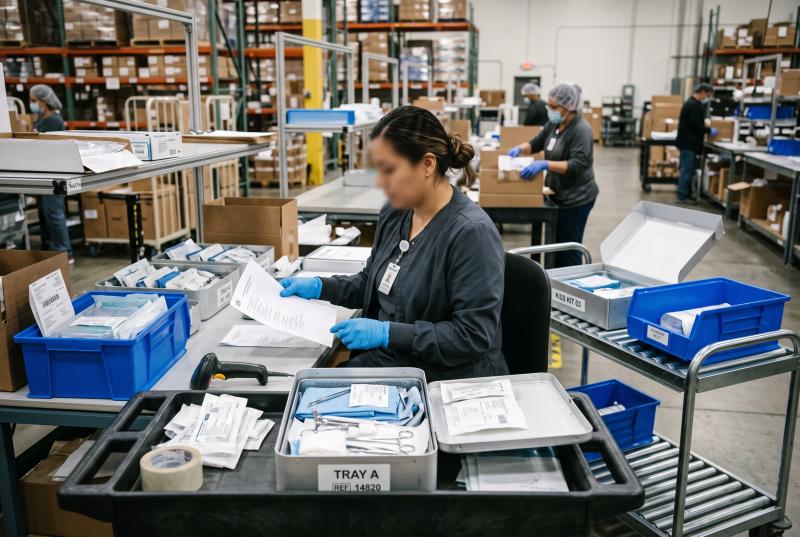
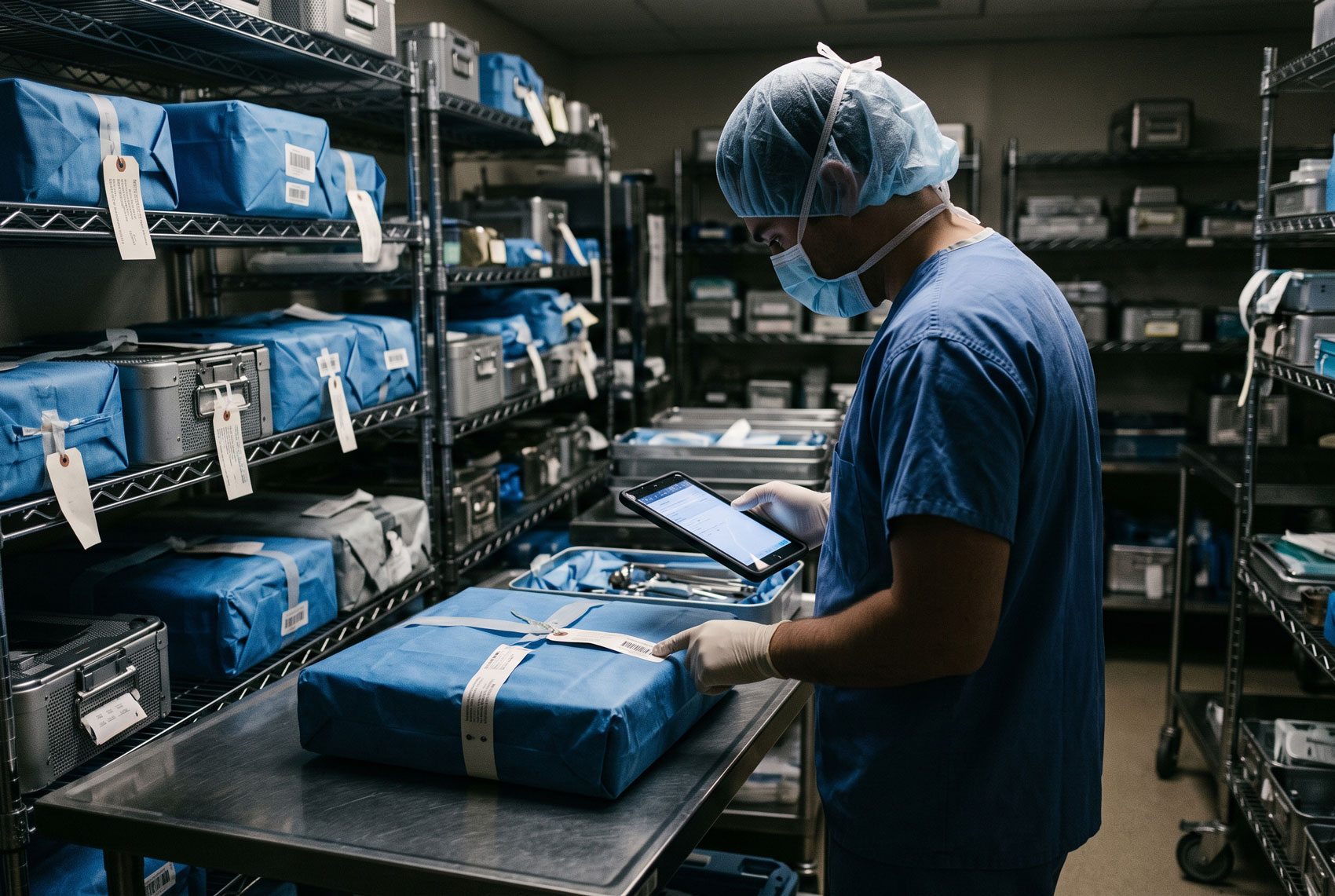
It is 6:58 a.m. The patient is prepped. The surgeon is gowned and standing by the sink. The block schedule says the incision starts at 7:00. What the circulating nurse does not have, yet, is a confirmed answer to a much smaller question: is the vendor tray for this case actually on the shelf, decontaminated, and complete, or is it still somewhere between the loading dock and sterile processing.
By 7:12, nobody has said the word cancel. But the case is already late, and every room behind it on the board is about to feel it. The easy explanation making the rounds afterward is usually some version of SPD is slow or the rep dropped the tray too late. Both might be true on any given morning. But neither explains the deeper pattern, which is that this case was scheduled, confirmed, and printed on the board for weeks. It was never actually confirmed ready. Scheduling and readiness get treated as the same fact on most days. They are not. They are two different claims, produced by two different teams, working from two different sources of truth that rarely talk to each other before the patient is already on the table.
A Time Slot Is Not a Fact About the Tray
A scheduling system is good at answering a narrow set of questions: which surgeon, which procedure, which room, which hour. That is a real and necessary job. But it is a claim about intent, not a claim about physical reality. First Case On-Time Start, or FCOTS, is the industry's standard yardstick for how often that intent actually holds, and the national picture is not flattering. Averages tend to sit near 60%, while the top-performing hospitals push closer to 90%. The gap between those two numbers is not mostly a staffing story or a surgeon-arrival story, although both contribute. A meaningful share of it comes down to whether the physical inputs to the case, especially loaner and vendor trays, were confirmed present and processed with enough runway before the room opened.
Hospital operations consultants who study this problem often define a clean case with a short checklist: clearances obtained, testing complete, preference cards attached, and vendor trays in the building with enough time to sterilize, among other items. Notice what that checklist is actually doing. It is treating tray presence as a separate condition from the scheduled time, one that has to be verified independently, because the schedule itself has no way of knowing whether it is true. A case can be perfectly scheduled and still not be a clean case. That distinction is the whole story.
What the Gap Between the Two Actually Costs
The dollar figures on this are not exotic. Operating room time is commonly estimated at $50-$150 a minute once you account for staffing, equipment, and overhead. Run that against a simple model: a 10-room OR with a 50% FCOTS rate and an average 15-minute delay per late start. Closing that gap to the 90% industry benchmark has been estimated, in one widely cited operational model, at roughly $1.56 million a year in recovered capacity at $100 a minute. That number will move up or down depending on a facility's mix and rates, but the shape of it holds everywhere: a delay that looks like a rounding error at 7:00 a.m. compounds across a ten-room day and then across a year.
The cost does not stop at the delay itself, either. A first case that starts late pushes every case behind it, which means turnover teams absorb the loss, staff pick up unplanned overtime, and same-day cancellations climb when a gap late in the day cannot be closed at all. None of that shows up on the original schedule. It shows up in the aftermath, which is exactly why it keeps getting treated as a staffing or communication problem rather than a data problem.
The stakes are rising, not falling, because of where case volume is heading. Orthopedic and spine procedures are shifting into ambulatory surgery centers at a pace that has surprised even people who expected it, with outpatient total joint volumes climbing sharply in just the past few years. That shift changes the risk math. A hospital has central sterile processing capacity and enough scale to absorb a multi-tray loaner logistics headache without the day falling apart. An ASC is built around speed, lean staffing, and limited storage, with margins that depend on throughput and avoiding friction. The same missing tray that a hospital can quietly work around becomes a canceled case and a lost day of revenue at a facility with one OR and no redundant instrumentation sitting in a back room. As more complex ortho and spine cases move into that leaner setting, the tolerance for a schedule that cannot vouch for its own trays keeps shrinking.
Readiness Needs Its Own Live Feed, Not a Faster Huddle
The standard fix in OR management circles is a daily multidisciplinary huddle, usually held the afternoon before, where staff walk through the next day's lineup and flag anything that might cause a delay. It is a genuinely useful practice, and hospitals that run it well do see FCOTS improve. But look closely at what a huddle actually is: a scheduled meeting where a human being reports on the current status of a tray, because no system is doing that reporting automatically. If the underlying location and status data is not live, the huddle is really just a more organized version of the same phone call it is trying to replace. It moves the guess earlier in the day. It does not remove the guess.
The alternative is pairing the schedule with an always-on picture of where every required tray, loaner set, or implant kit actually sits, whether that is a warehouse shelf, a truck, a decon bay, or a rep's trunk stock, so that a gap between what is booked and what is present surfaces two days out instead of at 6:58 a.m. This is the piece that case scheduling tools have historically been missing: not just a calendar of upcoming procedures, but a readiness signal tied directly to the physical inventory each procedure depends on. Hansel's case scheduling view works this way on purpose, showing upcoming cases alongside the tray and inventory status behind them, so a missing set is a flagged fact on Tuesday rather than a surprise on Thursday morning.
None of this replaces good communication between SPD, the OR, and vendor reps. It just stops asking a human to be the sensor. A schedule is a claim until something else confirms it. Right now, in most operating rooms, the thing that confirms it is a person walking to a shelf and looking. The facilities that close the FCOTS gap in the next few years will not be the ones that run a tighter huddle. They will be the ones that stopped treating a booked time slot as proof of anything, and started measuring readiness as its own fact, tracked continuously, right alongside the calendar it is supposed to support.