
A substitute tray can solve a supply problem and create an operations problem at the same time.
That is the situation more hospitals, ASCs, distributors, and 3PLs are facing as device disruptions become less predictable. The FDA's medical device shortage list now includes products with estimated interruptions extending into 2027, including stereotactic breast biopsy needles and several other device categories. The agency also maintains a separate discontinuance list, which matters because a product that is temporarily constrained requires a different response from one that is no longer being manufactured.
The field mistake is treating the substitute as the response. It is only one component of the response. The real plan has to answer four operational questions: What changed? Where is the alternate set? What is actually inside it? Is it processed and ready for the case on the schedule?
Availability is the first question, not the last
When a manufacturer removes a product, a distributor allocates inventory, or a facility cannot get its usual configuration, the first conversation is usually about availability. The team asks whether a substitute exists and how quickly it can be shipped. That is necessary, but it does not establish case readiness.
A substitute may be available in the market and still be sitting at the wrong hospital. It may be in the right IDN but assigned to a different site. It may have arrived at the loading dock but not yet reached sterile processing. It may have been processed but be missing one instrument, one implant size, or the documentation required for the case. It may be complete and sterile, but not linked to the procedure that now depends on it.
The FDA's current shortage information makes this distinction especially important. Its list describes estimated durations and affected device categories, but it does not tell a hospital whether a particular alternate set is physically present, complete, sterilized, or assigned to tomorrow's case. That work remains operational. The ongoing breast biopsy needle shortage is a useful example. Providers were advised to monitor inventory, forecast demand based on scheduled procedure volume, and minimize delays in diagnosis or treatment. None of those actions can be managed reliably from a shortage notice alone.
For a hospital or ASC, the difference between “we found an alternative” and “the case is protected” is often the difference between a procurement update and an operational plan.
The substitute creates a new chain of custody
Alternate kits also introduce a documentation burden that is easy to underestimate. The normal set may have a familiar name, a stable contents list, and a known path through the network. The substitute often arrives through a different channel, with different components, a different processing requirement, or a different owner.
That change can create several versions of the truth. The manufacturer has one list. The 3PL has another. The hospital's inventory file still carries the original kit name. The field rep knows what was actually delivered, but that information is sitting in text messages. The OR schedule reflects the original configuration because nobody updated the case record.
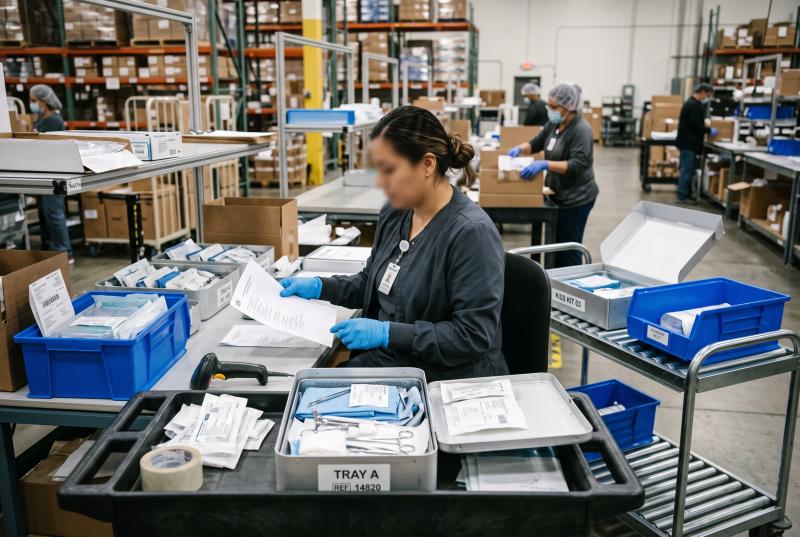
This is where a substitute kit becomes a chain-of-custody problem. The question is not merely whether a tray moved from warehouse to hospital. The team needs to know which asset moved, what it was expected to contain, whether contents changed, who handled the exception, and whether the set passed through sterilization before it was placed against a case.
That chain does not need to become a long manual checklist. It does need to be attached to the asset and visible to the teams making decisions. A named tray or tote with a live location, assignment history, contents record, and activity trail gives the manufacturer, 3PL, field rep, SPD, and OR coordinator a common reference. It replaces the question “Did someone send the alternate kit?” with a more useful sequence: “Which kit, where is it now, what is missing, and what must happen next?”
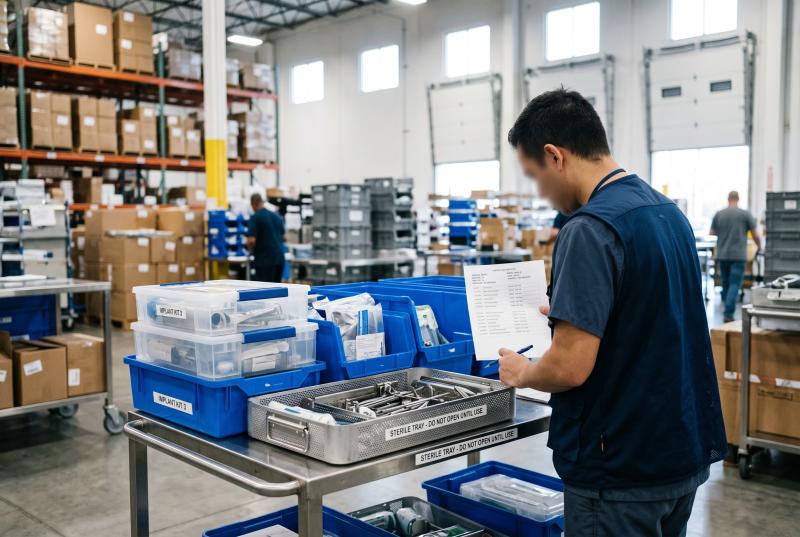
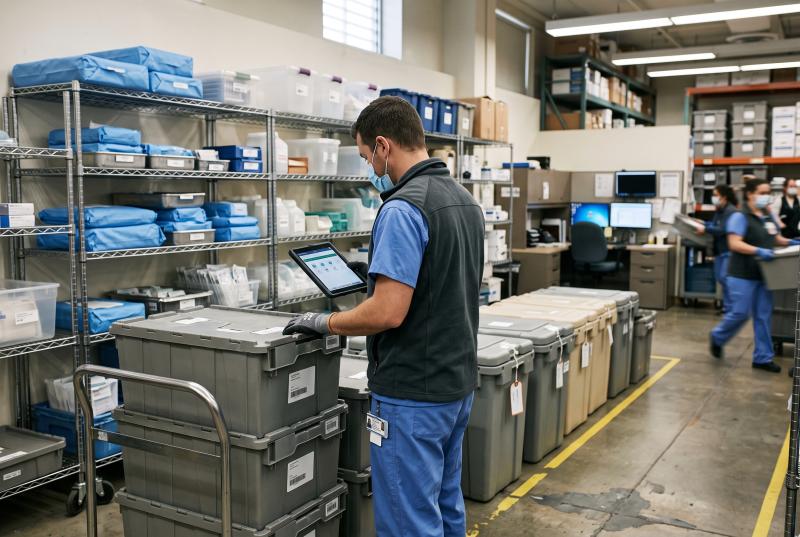
The processing step is particularly important for loaner and alternate sets. A tray can disappear from visibility when it enters decontamination, reappears after sterilization, and then gets mistaken for a different set because the record was updated by hand. Tags that remain on the asset through sterilization preserve the link between the physical tray and its operational history. That matters when a substitute is moving quickly across an IDN and nobody has time for another barcode walk.
Governance has to cross the IDN, not stop at one site
Shortage work becomes harder when an IDN has several hospitals, ASCs, warehouses, and shared service centers. The alternate set may be approved centrally but physically managed locally. One site may have enough inventory while another is exposed. A 3PL may hold the only complete kit, but the schedule may not reflect its transit time.
This is why substitute-kit governance cannot live only in procurement or only in the SPD. Procurement can identify the approved alternative. Clinical leadership can confirm that it is acceptable for the procedure. SPD can determine whether it can be processed safely and on time. Operations has to connect those decisions to the actual asset and the actual case.
The shared picture should include at least five elements:
- Identity: the original set, alternate set, and asset-level identifier should not be confused.
- Location: the team should know whether the set is at a warehouse, hospital, ASC, SPD, or in transit.
- Contents: the expected kit configuration should be compared with what is actually present.
- Processing status: arrival, decontamination, sterilization, inspection, and readiness should not be collapsed into one “on hand” label.
- Schedule assignment: the alternate should be tied to the procedure that depends on it, with exceptions visible before the case is under pressure.
These controls are not theoretical. In late October 2026, Becker's Healthcare is dedicating an ASC operations session to how facilities are managing supply shortages, vendor relationships, inventory risk, and data. The session description reflects what operators are already seeing: shortage management is becoming a case-readiness and margin issue, not just a purchasing issue.
For field teams, the practical benefit is fewer calls that begin with “Where did the replacement set go?” For SPD, it is earlier notice that an unfamiliar configuration is arriving and needs review. For the OR, it is a clearer answer before the first incision about whether the required instruments and implants are actually ready.
The right metric is protected cases, not substitute shipments
A shipment count can make a shortage response look successful while cases remain exposed. The more useful measure is whether the network protected the procedures that depended on the alternate inventory.
That requires reporting across movement, availability, contents, and scheduling. How many alternate sets were requested? How many arrived before the required cutoff? How many were complete? How many required reprocessing? How many were assigned to cases that later changed? How often did a site have an asset on hand but not case-ready?
Those questions also expose the economics of the response. A substitute kit that is repeatedly moved between sites may be solving one shortage while creating utilization loss elsewhere. A set that spends weeks in a hospital without being used may look like safety stock but function like stranded capital. A kit that cannot be located after sterilization may trigger another shipment, another processing cycle, and another round of calls.
Visibility does not eliminate shortages. It does prevent every shortage from becoming a separate search exercise. When assets, kit contents, processing activity, and procedures are connected, leaders can see whether the network needs more inventory, better distribution, earlier scheduling decisions, or simply fewer blind spots.
The sharpest way to think about a substitute tray is this: it is not a replacement for the old plan. It is a new operational object with its own identity, location, contents, processing path, and case assignment.
If those facts remain scattered across spreadsheets, text messages, and memory, the organization has not built resilience. It has only moved the uncertainty one step closer to the OR.