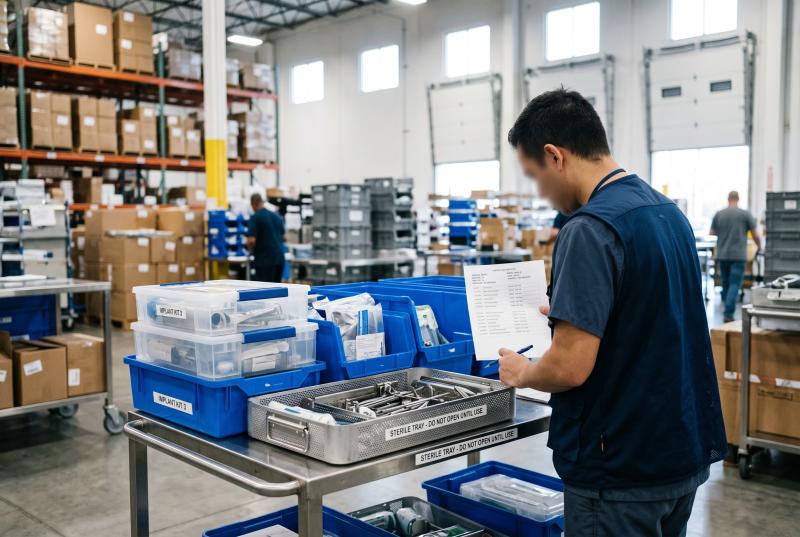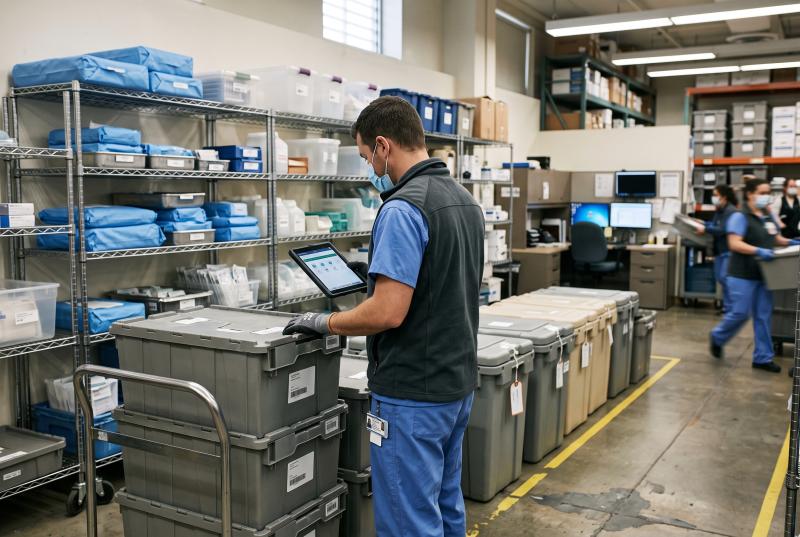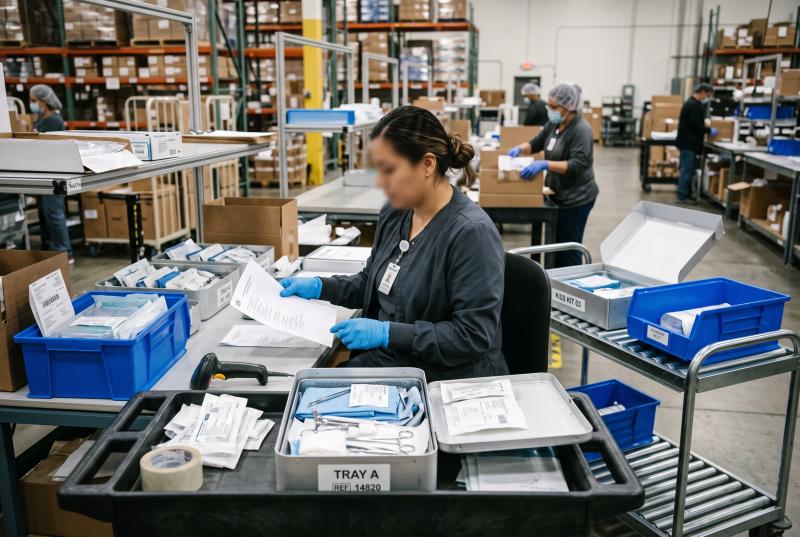
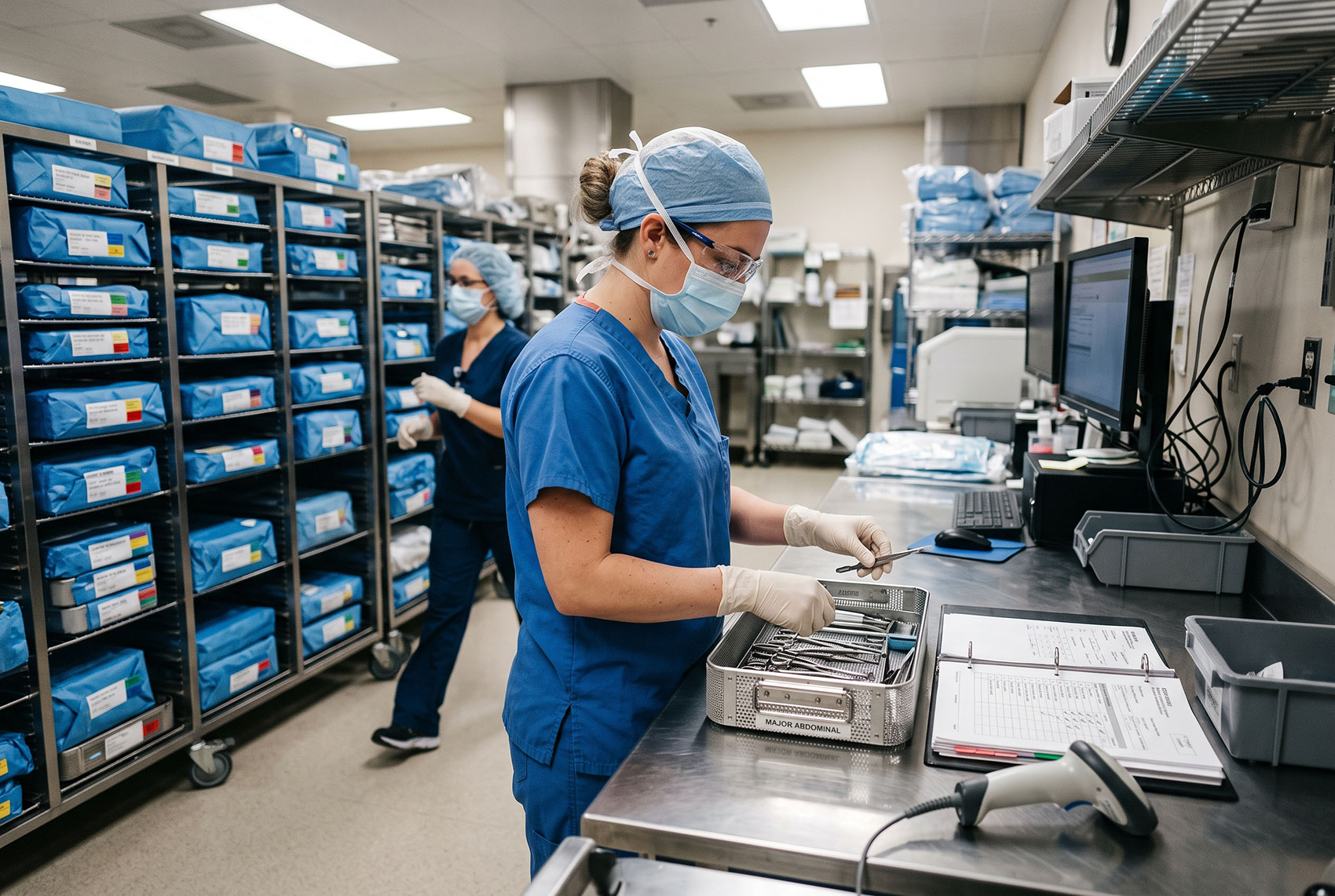
It's Tuesday morning. A knee replacement is on the schedule at a 10-room hospital in the midwest. The surgeon requested a specific loaner kit from the device manufacturer. Someone called the vendor rep three days ago. The kit was supposed to arrive on Monday. No one has seen it yet.
SPD supervisor calls the OR. OR calls the warehouse. Warehouse calls the loading dock. Meanwhile, the OR tech pulls up the count sheet on her phone and waits. The case is scheduled to start in 90 minutes.
This happens thousands of times a week in hospitals and ASCs across the country. It is not a staffing problem. It is not a supply shortage. It is a visibility problem, and it touches loaners in ways that owned inventory never does.
The Loaner Kit Disappears at the Hospital Door
Loaned surgical instrument sets are not part of a hospital's core asset base. They belong to the manufacturer or distributor. A surgeon requests them for a case. A vendor rep or national loaner center ships them to the hospital, usually with 48 hours to spare before surgery. AORN guidelines recommend this window to give sterile processing time to decontaminate, assemble, inspect, and sterilize everything per the manufacturer's instructions for use (IFU) before the case begins.
In theory, that is clean and predictable. In practice, the moment a loaner kit crosses the hospital dock, it vanishes.
The manufacturer can track it until it ships. After that, there is no shared visibility. The receiving dock scans a label or checks a packing slip. A warehouse worker picks it up. SPD receives it some hours later. No automated notification. No real-time confirmation. No way for the OR scheduler or the surgeon to know where the tray actually is in the building.
Smaller hospitals and ASCs are hit hardest. "When the same shortage hits a 3-room ASC, the of..." well, the response is chaos. ASCs have no dedicated warehouse manager, no SPD coordinator logged into a centralized system, no buffer inventory. One loaner kit going astray means one case gets cancelled or pushed back.
And because ASCs are now handling orthopedic implant cases that CMS cleared for outpatient settings in 2026, loaner kit demand is growing faster than tracking infrastructure to support it.
Manual Check-In Becomes a Scheduling Wildcard
The core issue is that loaner inventory relies on manual handoff at the hospital door, and manual processes do not scale.
When SPD finally receives the kit (because someone found it in the staging area, or in a corner of the loading dock), they must open it, physically count every instrument against the packing list, inspect for damage or contamination, record the receipt, and flag it in whichever system the hospital uses - if they have one. Many SPDs do not. A binder, a spreadsheet, a text to the surgeon's scheduler. Whatever the hospital has improvised.
Only after that manual check-in does the case team get visibility. And only at that moment can someone confirm whether the kit is complete, whether it requires special sterilization parameters, whether it will arrive in time for the 7 a.m. start time.
The lag between dock arrival and OR notification can be hours. In a hospital where one OR is blocked by a missing tray, revenue leaks and the downstream cases cascade. An hour delay in SPD translates to a 90-minute delay in the OR if the next case has to move in. A cancelled case is a $10,000-$30,000 hit to the facility depending on procedure and payer mix.
The manufacturer, meanwhile, has no idea that their loaner kit arrived at all. They cannot plan reprocessing back at the central loaner center. They cannot forecast when the kit will return or what condition it will be in. They cannot verify that the hospital sterilized it correctly. Some vendor representatives will call the hospital to ask, "Do you have my kit?" No system of record. No audit trail. No proof.
A Shared Picture Changes the Economics
The fundamental insight is simple: loaner kits are rental assets that move across organizational boundaries. Hospital ownership, manufacturer ownership, warehouse, SPD, case day. Each handoff is an opportunity for visibility to die.
When a loaner kit arrives at the hospital dock with a real-time tracking tag that survives sterilization, visibility does not have to break. Automated location updates move the kit from dock to SPD to sterilization to the OR suite. The manufacturer sees the arrival. The OR scheduler sees the status live. SPD knows when to pull it for processing. The surgeon's team knows it is ready.
The case starts on time. No guessing. No calls. No delay.
For manufacturers, this changes the loaner business model. High-value orthopedic and spine kits cost $40,000-$150,000 per set. Most manufacturers operate 5-20 loaner kits per region to serve rotating case demands. If 20% of those kits sit idle in hospital trunks or warehouse staging because no one can account for them, that is dead capital. Real-time visibility shows the manufacturer exactly which kits are in use, how long they sit idle between cases, and when they need to return home for reprocessing.
For hospitals and ASCs, the upside is simpler: no more cancelled cases due to loaner arrival chaos. No more manual calls. No more spreadsheets. One live picture shared by vendor, warehouse, SPD, and OR.
This is not an aspirational vision. It is what happens when loaner kits carry the same automated tracking that own-inventory trays do. The only difference is the asset belongs to someone else.
Until visibility reaches the dock, loaner kit chaos will remain a hidden driver of surgical delays. The vendor waits to hear whether the kit landed. SPD waits to see the kit arrive. The surgeon waits for someone to find it. Everyone is solving the problem separately, and nothing moves until manual eyes verify it did.
The moment a hospital and its loaner partners share one system of record, that bottleneck lifts. The case starts. The revenue flows. The asset turns.