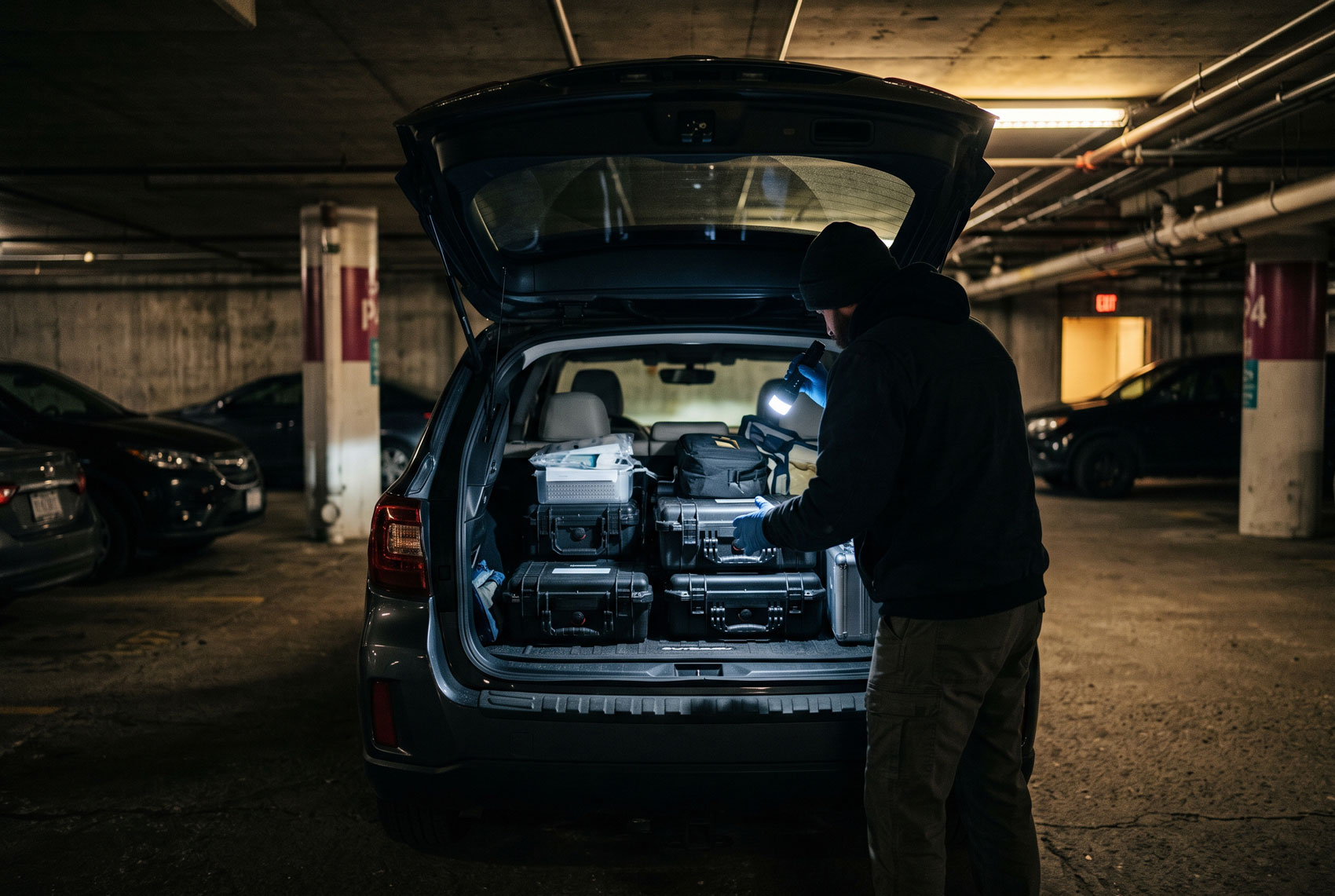
It's 9:40 on a Tuesday night and a trauma rep is standing in a hospital parking garage, phone flashlight in one hand, tailgate open, counting nail sets by feel because the dome light in his SUV died two territories ago. The call came in twenty minutes earlier: a fracture, an OR booked for midnight, and the surgeon's team needs to know which lengths and which locking screws are actually in this truck versus what's sitting in the vehicle of the rep who covers the next county over. Nobody in the home office can answer that question tonight. The distributor's system says the set 'shipped' three weeks ago. It has no idea the set is now split across two vehicles, a hospital loaner closet, and a case that already used four of the screws two Fridays ago.
This is an ordinary Tuesday for field inventory in orthopedics and trauma, and it gets treated, almost everywhere, as a rep problem: a discipline issue, a training gap, a 'we need better compliance with the count sheet' problem. It isn't. It's a visibility problem that got built into the system the moment inventory left a building where anyone was scanning things in and out.
The custody chain nobody owns
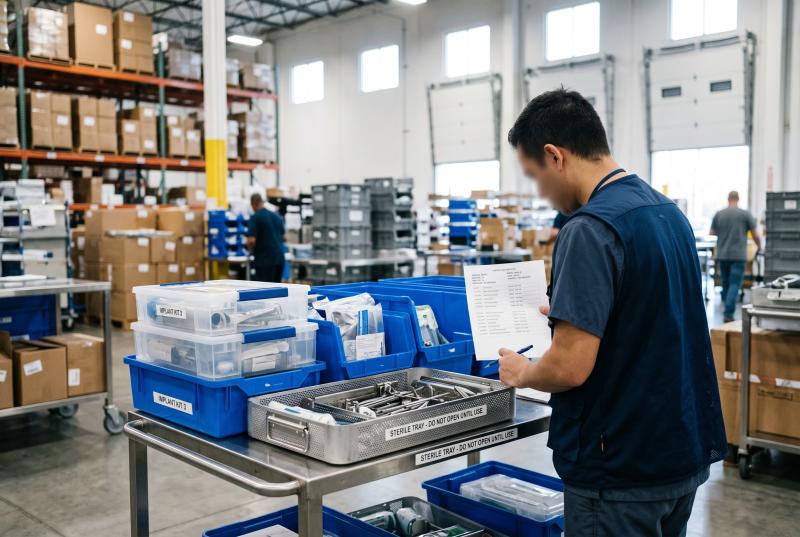
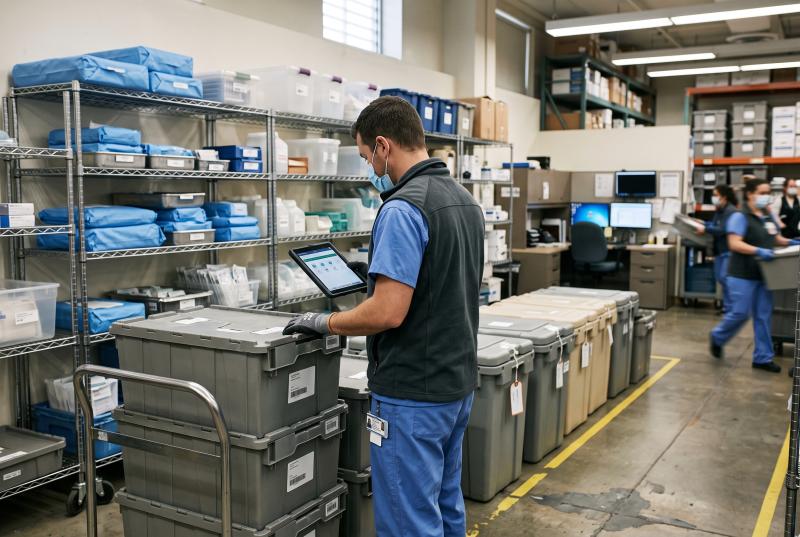
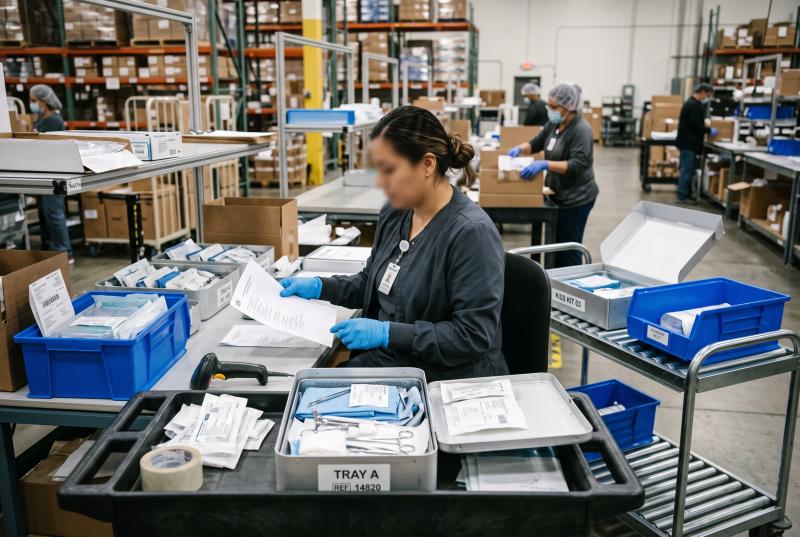
A tray or implant kit's life, on paper, looks tidy: manufacturer warehouse to distributor to hospital to OR to sterile processing and back. In practice, for a large share of orthopedic, spine, and trauma inventory, that path runs through a fourth and fifth stop nobody drew on the org chart: the back of a rep's vehicle, and a hospital storeroom the hospital doesn't consider its own inventory to manage.
Each of those stops belongs to a different party, which means each one is also a place where the official record and physical reality quietly split apart. A warehouse team can tell you a set left the building. It usually cannot tell you whether that set is now on a shelf in a consignment closet, riding in a trunk two states away, sitting unused in an OR core after a case that got bumped, or already back on a truck for return. Hospitals, for their part, generally don't police manufacturer-owned trays the way they police their own capital equipment, because it was never theirs to lose. It sits in a kind of no-man's-land: too valuable to ignore, not owned closely enough by anyone on site to be tracked with real discipline.
The rep becomes the default answer to 'where is it,' not because that's an efficient design but because there's no one else standing between the warehouse and the OR. A rep's job was never supposed to be rolling inventory clerk. It was supposed to be knowing surgeons, knowing technique, being in the building for a middle-of-the-night trauma call. Every hour spent counting screws by flashlight is an hour not spent doing the job the rep was actually hired for, and it still doesn't solve the underlying problem, because a manual count is only accurate for as long as it takes someone to open the trunk again.
Why scanning harder doesn't fix it
The industry's instinct has been to bolt more process onto the gap: barcode scans at handoff, photo audits of trunk shelves, usage forms filled out after the case, quarterly reconciliation projects that take weeks to run and are stale before the report even circulates. Every one of those approaches assumes the same thing, that a person will faithfully record a location change every time an asset moves, on top of everything else that person is already juggling at 11 p.m. in a hospital garage.
That assumption breaks down predictably, and not because reps are careless. Case volume goes up, product lines multiply, territories get realigned, and the manual layer that was already fragile gets asked to hold more weight. Counts drift. Nobody fully trusts the spreadsheet anymore, so people start double-checking by phone call, which is slower than the spreadsheet was in the first place. The fix meant to close the visibility gap ends up adding a second job on top of the sales job, and the gap is still there, just better documented after the fact.
The tell is what happens after a bad night like the one in the parking garage. The postmortem usually focuses on the rep: did they log the transfer, did they update the count, did they follow the process. Almost nobody asks the more useful question, which is why an instrument set worth more than the truck it rode in on had its location depending on one person's memory and a phone flashlight in the first place.
One location, regardless of who's holding it
The way out of this isn't a stricter version of the same manual layer. It's removing the dependency on someone remembering to report a location at all. That's the real case for tagging the asset itself with something built to survive the environments it actually moves through, rather than layering more software onto a process that only works when everyone remembers their part of it.
This is where Hansel's approach to tray tracking is worth naming plainly, without dressing it up as a cure for every field-inventory headache. An autoclavable tag stays with a tray or set through sterilization, which means visibility doesn't reset every time the asset crosses a boundary that used to be a blind spot, whether that boundary is a hospital dock, a decontamination room, or the back of a vehicle. Ops, the field rep, and the clinical team checking case readiness end up working from the same live picture instead of three different guesses reconciled by phone call. Utilization data that comes out of that same visibility, movement and dwell time, how often a set actually gets used versus how often it just gets driven around, gives distributors and manufacturers something sturdier than instinct when deciding what to stock outright versus what to keep circulating as a loaner.
None of this erases the underlying reality that inventory in this industry moves through more custody changes than almost any other product category. A trauma set really does need to be able to show up in the middle of the night. That flexibility is the point of the business, not a flaw to engineer away. But flexibility and visibility don't have to trade off against each other. The problem was never that inventory moves. It's that ownership, not location, has been the thing determining whether anyone could see it.
Ask the better question
The next time a set goes missing between the warehouse and the OR, the useful question isn't 'did the rep log it.' It's whether the organization built a system where knowing an asset's location never depended on someone remembering to say where they'd taken it. Trunk stock, consignment shelves, loaner closets, and rep vehicles aren't going away, and no amount of paperwork was ever going to make them behave like a warehouse. The fix isn't asking people to try harder at a job that was never designed for it. It's building visibility that doesn't care whose truck the asset is currently sitting in.