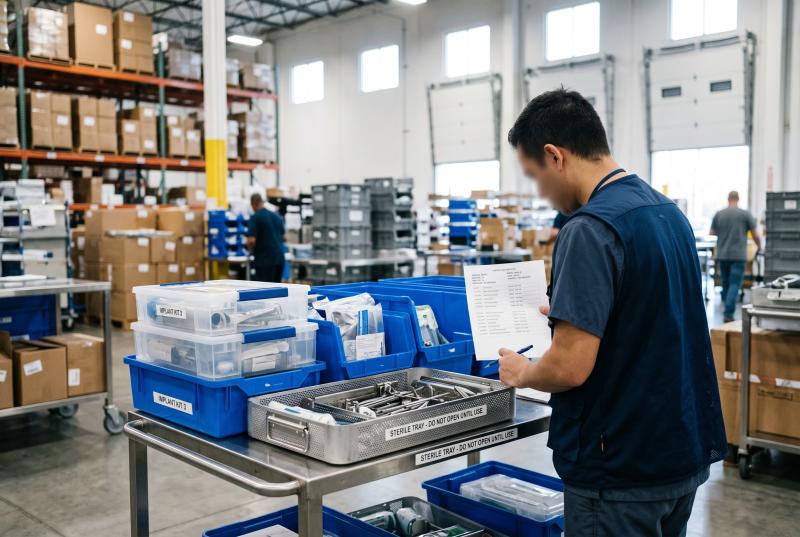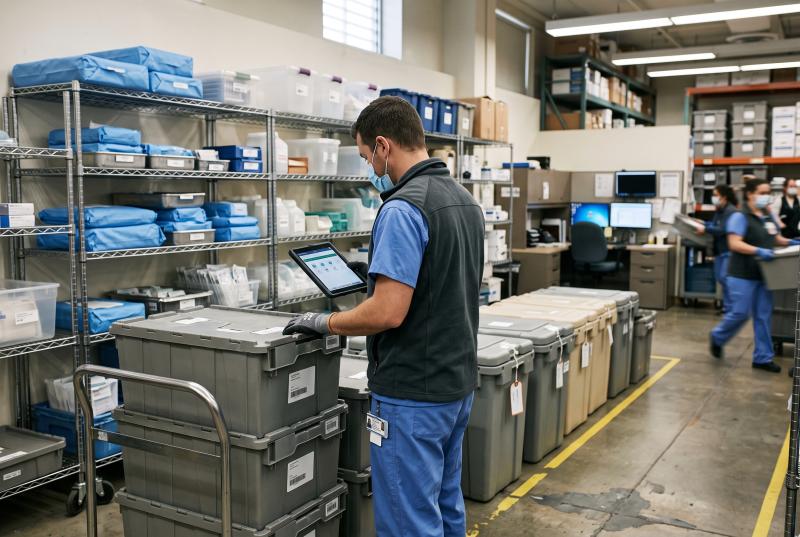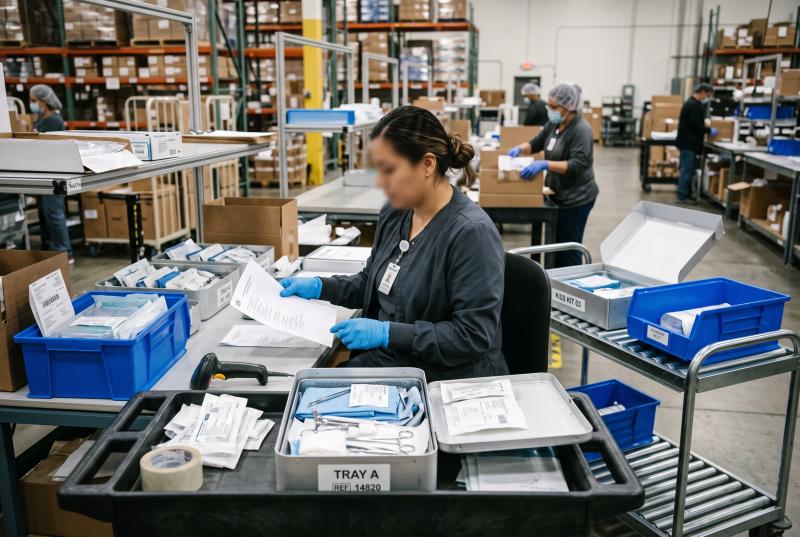
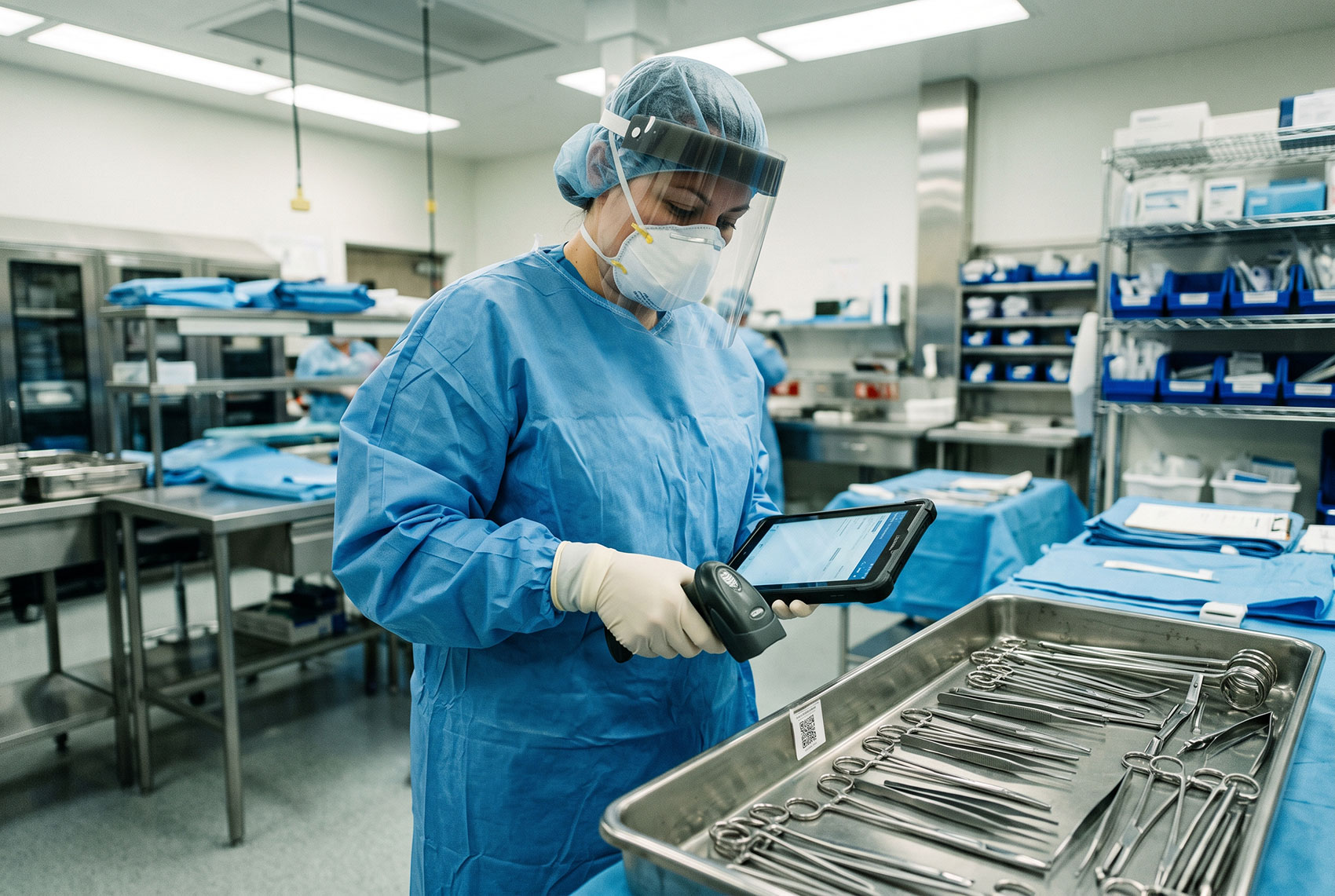
It is August 2026, and a hospital administrator gets a note in their inbox: the Centers for Medicare and Medicaid Services has finalized a new rule. Beginning in calendar year 2027, Medicare will require hospitals to attest that they used certified electronic health record technology to capture and store the complete unique device identifier (UDI) for every implantable device used in patient care. The message lands in a routine policy update, and gets filed. But on the dock that same afternoon, the orthopaedic team is doing what it has always done: pulling loaner sets from the manufacturer for next week's cases, and packing them into a vehicle to sit in a parking lot overnight.
These two moments are heading toward collision. One is regulatory. One is operational. Neither team is ready.
The UDI Mandate Is Real, But Documentation Hasn't Changed
The CMS Promoting Interoperability Program's new measure is not a suggestion. "Unique Device Identifiers for Implantable Medical Devices" will measure whether hospitals capture the complete UDI - a unique alphanumeric code that identifies the manufacturer, model, lot number, serial number, and expiration date of an implant - at the point of care, and store it in the EHR linked to the patient and procedure. When a hip implant is recalled, hospitals will be expected to answer: which patients got that device?
Today, most cannot. Even hospitals that have invested in RFIC cabinets for implant storage often lose visibility once an item leaves the cabinet. The device may be pulled into a surgical tray, the tray may be loaded into a vehicle, and somewhere in that journey, the link between the specific implant and its documentation breaks. The circulating nurse documents what was opened. The surgeon documents what was used. But there is often no systematic record of what was available before the case, what was actually implanted, and whether the right UDI made it into the patient chart.
For small ASCs and rural hospitals, the picture is more fragmented still. A loaner set arrives in a trunk, items are pulled directly into the OR, and the implant inventory system in the warehouse has no way to know what happened. The manufacturer's representative may have a clipboard note. The implant invoice lists what was sent. But the patient's EHR reflects only what the surgeon remembered to document after the case.
Wrong Implants Are Still Picked. Documentation Just Makes It Official.
Before 2027 gets here, consider what goes wrong when documentation is disconnected from the actual set contents. In orthopaedic surgery, a wrong-implant error is not theoretical. Case reports document instances where surgeons implanted devices designed for one technique (cemented) using another (non-cemented), simply because the instruments and implants were shelved together and no one verified the manufacturer's intended use before opening. The combination of a crowded tray, fatigue, and handoffs between circulating nurses, scrub techs, and sometimes a manufacturer's rep creates enough friction for mistakes to slip through - even with a Universal Protocol time-out.
When that happens, the patient is the first harm. The second harm is documentation. Because if the tray was pulled at 6 a.m., the implant was seated at 8 a.m., and no one linked the implant UDI to the EHR until the op note was finalized at 5 p.m., a gap exists. The circulating nurse knows what was opened. The inventory system knows what was removed. The surgeon's note says what was implanted. But none of that data flows into one place until after the case is already complete.
Starting in 2027, this gap becomes a compliance miss. And CMS will ask: did your EHR capture the complete UDI?
One Record Is Better Than Three Promises
The regulatory requirement points to a deeper operational truth: surgical readiness is not a moment. It is a thread that runs from set preparation, through transport, through sterile processing, through the OR, and into the EHR. If that thread is broken into pieces held by different systems - warehouse inventory here, sterilization tracking there, clinical charting somewhere else - then the UDI is documented late, after the case, as a reconciliation task. And reconciliation is where gaps hide.
The hospitals and ASCs that will comply smoothly in 2027 are the ones that treat the implant UDI as a live piece of clinical data, not a back-office compliance burden. That means: the tray is tracked from dock to sterile processing to the OR. The implant contents are documented before the case, not after. The circulating nurse sees what is in the set, verifies it matches the surgeon's plan, and that verification is recorded. The surgeon confirms again before implanting. And the EHR reflects that confirmed, timestamped record from the moment the set entered the OR.
This is not possible if the tracking system only works up to autoclave. It is not possible if loaner sets arrive in a vehicle with no visibility into contents until they sit on the supply cart. It is not possible if implant documentation lives in a manufacturer's shipping note and a nurse's memory.
A shared system of record - one that moves implant and tray data from warehouse through SPD through clinical, with real-time visibility - makes the 2027 requirement not just possible, but natural. The UDI is not a late-stage audit. It is a live fact, known before the case, and confirmed by the team that depends on it.
The Compliance Train Is Already Moving
The CMS rule is new. But the expectation is not. FDA recall procedures have always required traceability. The healthcare system has always been liable when the wrong device is implanted. The difference is that in 2027, a regulator will ask for proof that the system works, not hope that someone kept good notes.
For distributors and manufacturers, this is also a moment to look at what you send into the field. If a loaner set arrives without clear labeling, clear inventory counts, and a way for the facility to mark what was actually used, then you are creating the conditions for a documentation miss. The liability flows upward.
For operators and SPD leaders, the 2027 date means now is the time to ask: what is my system of record for implant UDI? Is it a spreadsheet someone fills out after the case? Is it warehouse inventory with no clinical link? Or is it a live thread that connects what was packed, what was sterilized, what arrived in the OR, what the surgeon confirmed, and what the EHR records? If it is the first two, the compliance crunch will arrive in late 2026, when hospitals realize they have months to close the gap and no clear way to do it.
The better option is to start now. Not because regulators are asking, but because the next recalled implant should not require a guessing game about which patients got it. Your facility knows. The data is there. But only if you are looking.