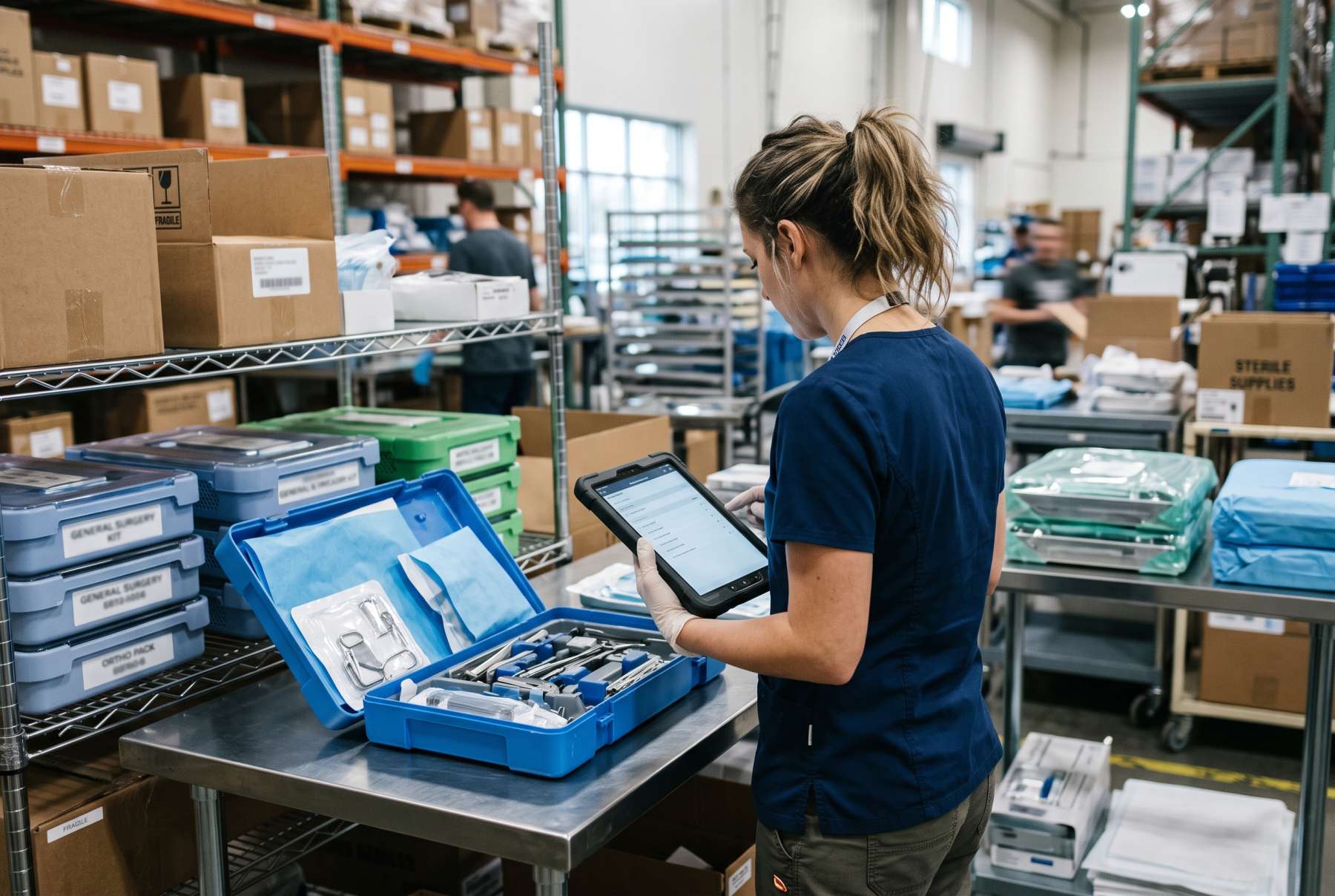
The most dangerous word in a surgical kit inventory is often “complete.”
A kit can be sitting in the right warehouse, hospital, or ASC and still be the wrong answer to an inventory question. One component may have been used in a case. Another may have been opened and discarded. A replacement may be sitting in the tray without anyone updating the record. The container is visible. The contents are not.
That distinction has become harder to ignore as the FDA has posted a run of 2026 corrections and recalls involving convenience kits and kit components. The notices include corrections posted on August 3, August 12, August 18, August 20, and September 10, 2026, involving kits that contained affected drugs or devices. The operational instruction is familiar: identify affected product, stop use, segregate it, and account for anything that may have moved. The hard part is proving what happened inside a distributed kit network.
The lesson is not that manufacturers, 3PLs, hospitals, or ASCs are careless. It is that a kit-level record is often asked to answer a component-level question.
The container is not the inventory
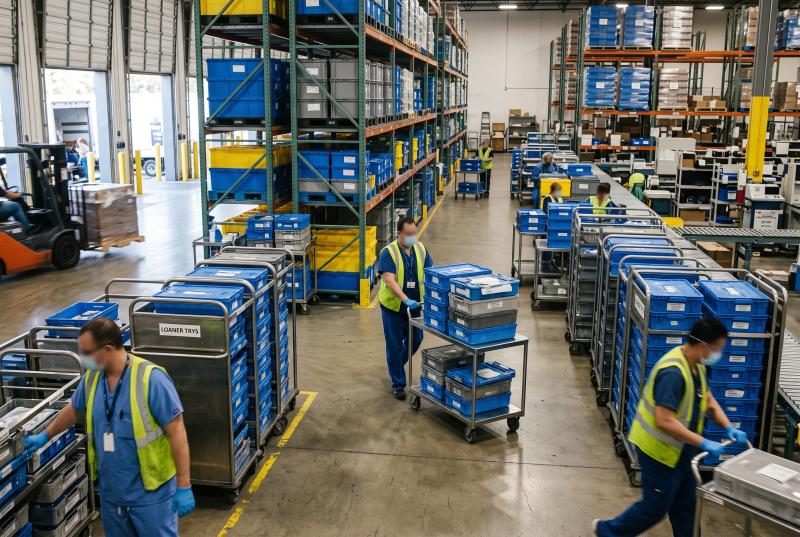
Most organizations know where their kits are. They can tell you that a loaner tray is at a hospital, that an implant tote is in a rep’s vehicle, or that a convenience kit was shipped to an ASC. That is useful information, but it is only the outer layer of control.
When a component issue arrives, the question changes. The team needs to know which kits contain the affected item, which kits were opened, which components were used, which replacements were added, and which sets were returned without a proper count. A location field cannot answer those questions by itself.
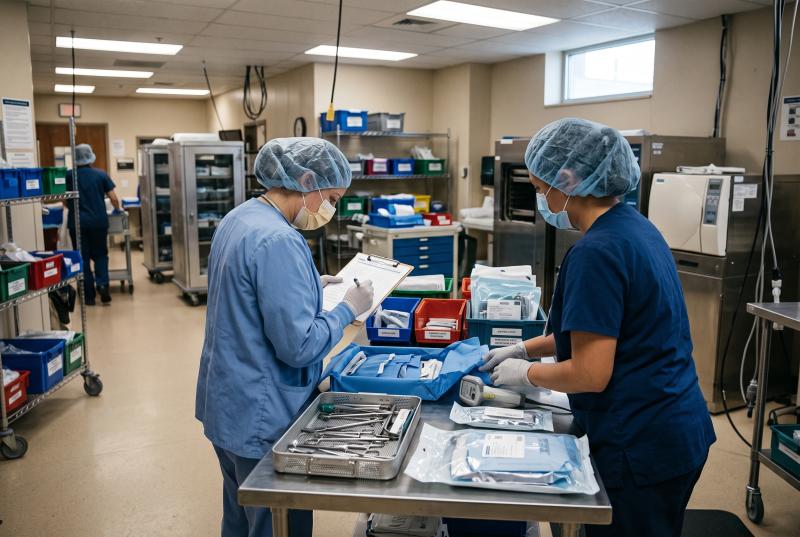
This is where many recall and quality workflows become more manual than they appear. A coordinator exports a list of kits. Someone calls the field representative. The hospital checks a shelf. The 3PL searches a return area. A sterile processing technician opens a tray that may already be scheduled for the next case. Each handoff creates another opportunity for the record to drift away from the physical set.
The drift does not require a dramatic failure. It can begin with a single implant used during a case, a missing instrument discovered during decontamination, or a component exchanged because the original was damaged. If the kit remains named and located as one object, the system can continue to report a tidy status while the contents become uncertain.
The FDA’s recent convenience-kit notices make the distinction concrete. In one 2026 recall involving B. Braun anesthesia trays, the affected issue was tied to a component supplied inside the tray. The recall record states that 280 pieces had been distributed and that all had been returned at the time of the notice. That is a successful outcome, but it also shows why the accounting target is not simply “find the trays.” The target is to identify the affected component wherever it was packed, shipped, stored, or used. FDA recall record for B. Braun anesthesia trays
Partial use is where the record breaks
Full-kit returns are comparatively easy to understand. A set leaves a warehouse, arrives at a facility, is used, and comes back. The organization can inspect the return, perform a count, and release or hold the asset.
Partial use is different. It creates two inventories from one original kit: the container and the items that have left it. The component may now be implanted, discarded, quarantined, sitting in a procedure room, or placed in a separate replenishment bin. The kit itself may still be shown as “at hospital” or “available,” even though its readiness depends on work that has not been recorded.
That is not just a supply chain inconvenience. It affects recall effectiveness, case readiness, implant documentation, and the credibility of the quality record. If a component was used, a recall team may need a patient or procedure-level follow-up. If it was not used, the team needs evidence that it was physically located and segregated. If the kit was opened but the component was never consumed, the status still needs to be different from a sealed, untouched kit.
The operational question should therefore be more specific than “Where is the kit?” It should be:
- Where is the kit now?
- What should be inside it?
- What is actually inside it?
- What changed after the last case?
- Who verified the difference, and when?
That is the difference between location visibility and inventory evidence. A live location can tell an operations team where to look. It cannot, by itself, prove what the team will find when the kit is opened.
Readiness needs an exception record
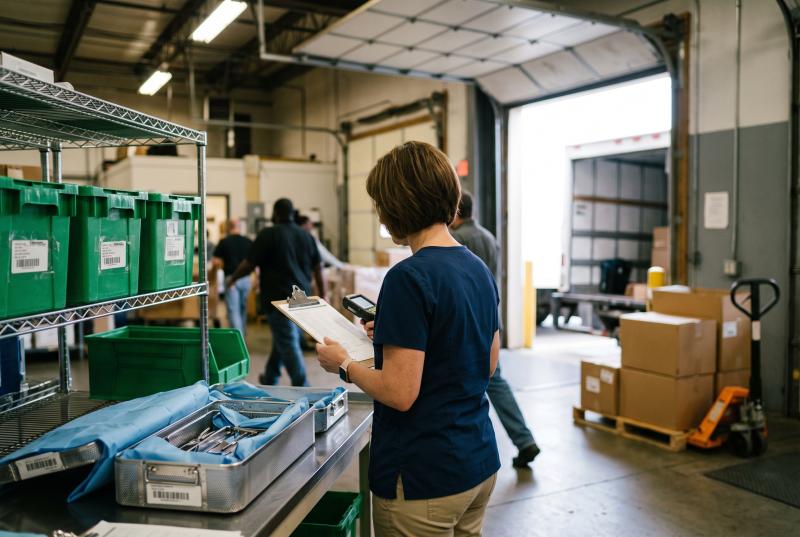
The obvious response is to add more scans. Sometimes that helps. But a barcode walk performed after the fact can still miss the moment when the kit changed. It can also create a false sense of control if the team scans the outer asset while assuming the contents remain unchanged.
A stronger process treats missing or changed contents as an exception that must move through a defined workflow. The kit is not simply marked complete or incomplete. It is held, assigned, checked, replenished, and released. The record should show what blocked readiness and who cleared it.
That matters in a hospital or ASC where the next case may depend on a tray that is physically present but not clinically ready. It matters in a 3PL where a returned set may need inspection before it is available for another customer. It matters to a manufacturer whose field team must distinguish a kit that is moving from one that is sitting idle because one component has not been replaced.
A practical operating record can connect three layers:
- The asset: the named tray, tote, or loan set and its current location.
- The contents: the expected kit configuration, on-hand components, implants, and captured usage.
- The exception: the missing item, hold, replenishment task, quarantine status, or release decision.
Those layers do not need to become a giant enterprise resource planning project. They do need to stay connected. A kit record that says “at Hospital A” is useful. A kit record that says “at Hospital A, missing one component, held pending replacement, last verified after the September 12 case” is operationally meaningful.
Hansel’s role in that model is not to replace the physical count or the clinical judgment of SPD staff. It is to keep the asset, its contents, and the readiness work in one operating picture. Named kits can be tracked across warehouses, hospitals, ASCs, and field operations. Kit contents can be compared with what is actually on hand. Mobile GS1 capture can record component usage at the point of work instead of relying on a later spreadsheet pass. Workflow stages can hold an item when missing contents block release. Those details matter because the gap between “used” and “updated” is where many records become unreliable.
The better recall question
When a component-level correction arrives, the first question will still be which products and lots are affected. The second question should not be “Which facilities received them?” That is only the beginning.
The sharper question is: Can we prove the status of every affected component, including the ones that entered a kit and later separated from it?
That requires a chain of custody that follows the contents, not just the container. It also requires the organization to distinguish a kit that is located from a kit that is counted, a kit that is counted from a kit that is ready, and a kit that is ready from a kit that was actually cleared after a component-level issue.
The recent FDA convenience-kit activity is a timely reminder that recall control is often won or lost after the original shipment. The physical question is rarely just where the box went. It is what changed after the box arrived, whether anyone recorded that change, and whether the next person can trust the answer.
A kit is not ready because the container is nearby. It is ready when the organization can account for what is inside it.