A recall notice can name the product, lot, and affected customers. That does not mean an operations team knows where every physical kit is.
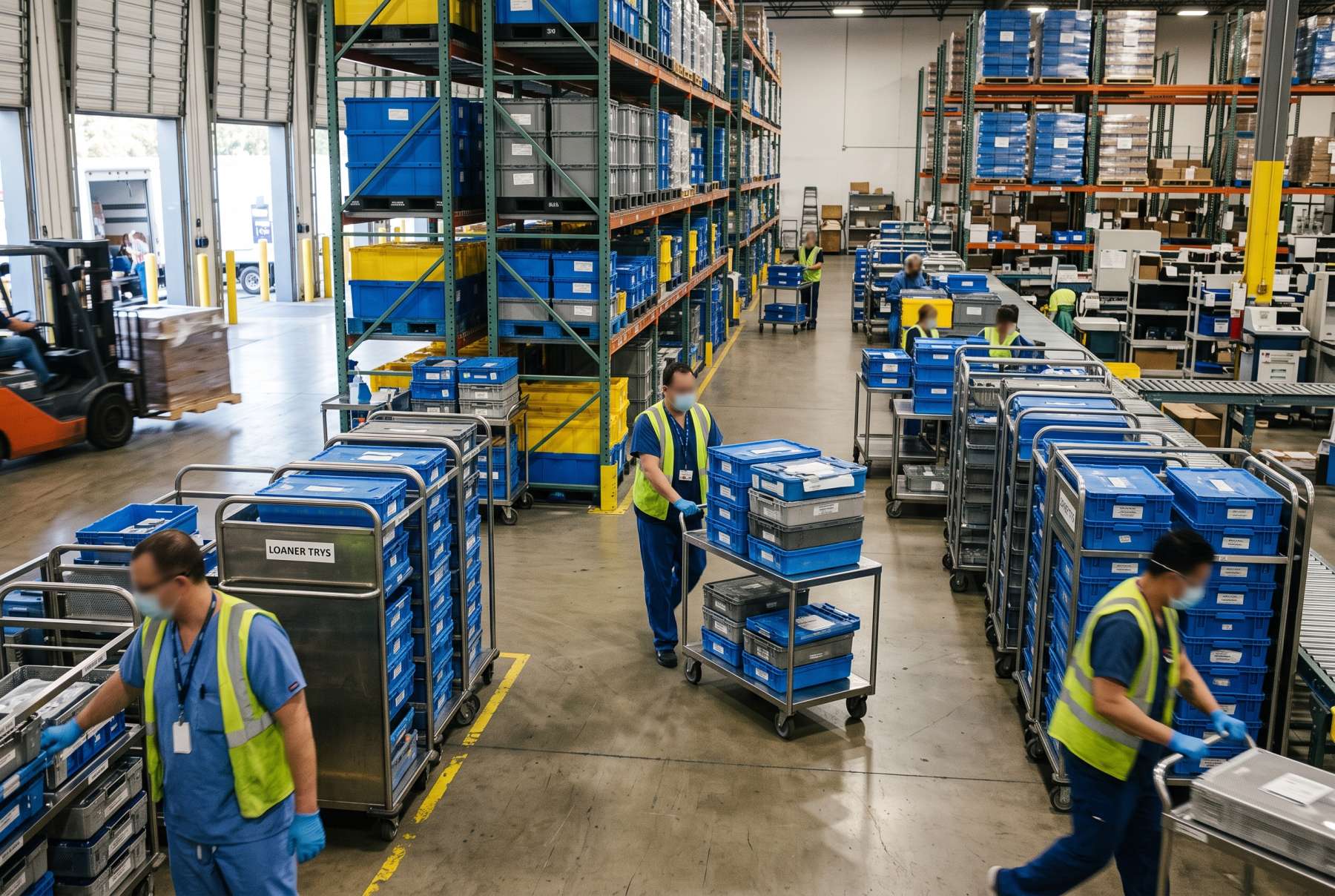
That gap is becoming more visible as medical device distribution stretches across manufacturers, 3PLs, regional warehouses, hospitals, ASCs, and field representatives. A tray may be packed in one state, processed in another, sent to a hospital, opened for a case, and returned through a different path than the one it took outbound. The record may say the kit was shipped. The clinical team needs to know whether the affected component is still inside it.
A recent FDA record for the Class I recall of the Halyard PERC TRAY kit shows the shape of the problem. The recall covered 6,052 kits distributed across 7 states. The action required customers to identify, segregate, and quarantine affected product, while also notifying downstream customers if the kits had been further distributed and maintaining records to demonstrate effectiveness. The firm later issued an updated letter adding kits to the affected product list. The FDA recall record is a useful reminder that a distributed recall is not one search. It is a series of handoffs that must be reconciled.
The product list is the beginning, not the inventory
In the first hour of a recall, teams usually reach for the same information: item number, lot number, serial number, UDI, customer list, and shipment history. That information is necessary. It is also incomplete when the affected device moved as part of a larger kit.
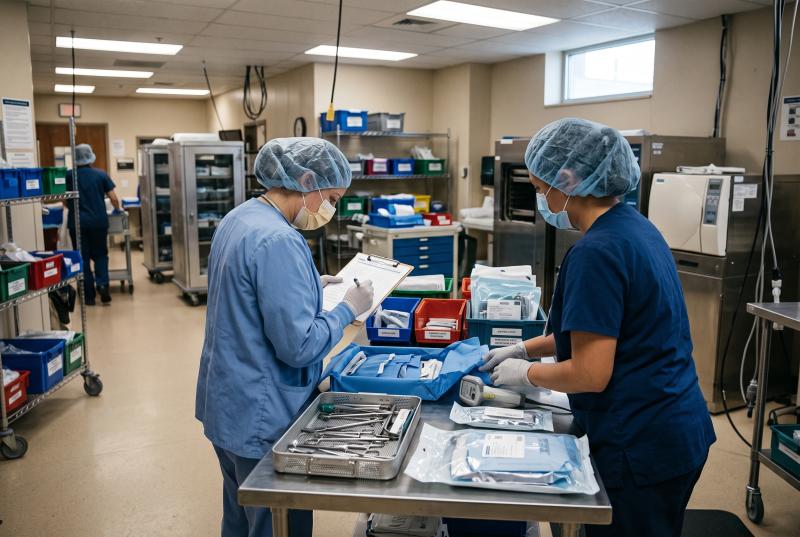
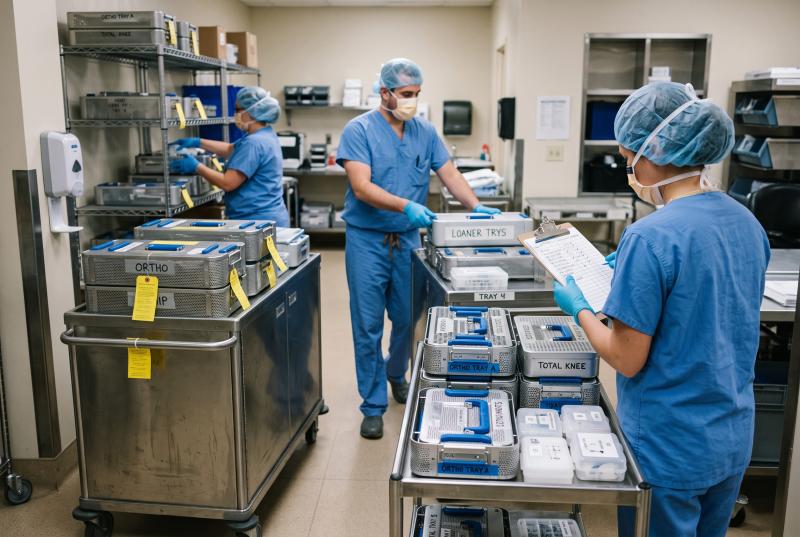
A convenience kit or surgical tray is not a single point in a database once it enters the field. It becomes a physical object with a location, a custody history, and a changing contents record. It may be sitting at a 3PL, staged at a hospital, in sterile processing, inside an operating room, or in transit back to a manufacturer. The affected component may have been used, removed, replaced, or separated from the kit without the outer container being updated.
That is why a shipment report can create false confidence. It can establish that a kit went to a customer. It cannot, by itself, establish that the kit is still there, that it was not forwarded, or that the recalled component was not separated during a case.
The FDA guidance on product recalls, removals, and corrections emphasizes the need to identify affected product, notify customers, control distribution, and evaluate recall effectiveness. In a distributed medical device network, those requirements become physical questions. Which building has the kit? Which team owns the next action? Has the kit been placed on hold? Was the hold applied before the next scheduled procedure? Can someone prove what happened to the contents?
Every handoff creates a new version of the truth
3PLs are often blamed when a recall response becomes difficult, but the operational weakness usually starts earlier. The network has multiple systems of record, and each handoff updates only part of the picture.
The manufacturer may know the original shipment. The 3PL may know the receiving scan and outbound label. The hospital may know that a tray arrived at the loading dock. Sterile processing may know that it entered decontamination. The field representative may know that the kit was opened for a case. None of those facts is the whole chain.
When the data is stitched together manually, the team starts asking questions by phone and email:
- Was this kit received or only scheduled?
- Did it go to the hospital or remain at the regional warehouse?
- Was the tray opened and partially used?
- Did sterile processing return the same set, or a replacement?
- Was the component removed before the kit left the building?
- Who is responsible for the quarantine decision?
Those questions are not administrative noise. They are the recall work. A network that cannot answer them quickly may still have excellent shipment records and a well-written quality procedure. The failure is that the physical asset has become invisible between systems.
For loaner trays and implant totes, location has to survive the parts of the workflow where manual records are weakest. A tag that remains with the asset through decontamination and sterilization gives the team another layer of evidence. Beacons and gateways can report presence at the warehouse, hospital, ASC, or sterile processing location without requiring a staff member to perform a barcode walk. When the last reliable sighting has no site, the honest answer is that the asset is in transit, not that somebody should guess which building has it.
That distinction matters during a recall. “Shipped to the customer” is a historical event. “Last seen in sterile processing” is an operational fact. The second one can drive a quarantine action.
Quarantine has to be a workflow, not a label
Most recall plans contain the word quarantine. The practical question is what happens after someone marks an item as quarantined.
If the kit is at a 3PL, the action may be a warehouse hold and a count of affected units. If it is at a hospital, the action may require coordination between materials management, sterile processing, the service line, and the field representative. If it is scheduled for a case, someone must prevent the set from moving to the procedure. If it has already been opened, the team may need to reconcile missing items before it can declare the kit controlled.
A static status field does not assign those steps. It does not show which exception is blocking release or whether the person responsible has completed the physical check. This is where recall work begins to resemble case readiness work. An item has a known owner, a hold condition, a missing piece, and a release decision.
A useful operational workflow separates at least 4 states:
- Located: the physical kit or asset has a reliable last sighting.
- Contained: the kit is no longer available for shipment, processing, or use.
- Reconciled: the team has checked the kit contents and documented any component movement.
- Released or dispositioned: the kit has either been cleared, repaired, returned, destroyed, or otherwise handled under the corrective action.
The point is not to create a more elaborate dashboard. It is to prevent “located” from being mistaken for “controlled.” A tray can be located in a hospital and still be sitting in the path of tomorrow’s case. A kit can be quarantined at a warehouse while a related set has already moved to an ASC. A recalled component can be removed while the outer kit continues moving without a reliable contents record.
For teams managing this work, automated visibility and explicit exception stages reinforce each other. Location data answers where the asset was last seen. A workflow board answers what still has to happen before the hold can be released. Missing-item checks keep a partial kit from appearing complete merely because the outer tray is present. An audit trail makes the final response less dependent on memory and email threads.
The measure of recall readiness is not notification speed
Fast notification matters, but notification is only the start of control. The stronger test is whether an organization can move from an affected product record to a verified physical disposition without rebuilding the network by hand.
That requires a shared picture across the manufacturer, 3PL, hospital, ASC, sterile processing team, and field organization. It requires the system to distinguish a kit from its contents, a shipment from a current location, and a quarantine label from a completed hold. It also requires enough history to explain what happened after the asset left the manufacturer.
The lesson from distributed recalls is not that 3PL networks are too complex to manage. It is that the handoff cannot be treated as the end of the record. Every handoff is where the record changes shape, and every change creates an opportunity for the physical kit to disappear from view.
The recall question is therefore sharper than “Who received the affected product?” The question is: Where is the physical kit now, what is inside it, who owns the next action, and what evidence proves it is controlled? Until a network can answer all 4, the product list is still only a list.