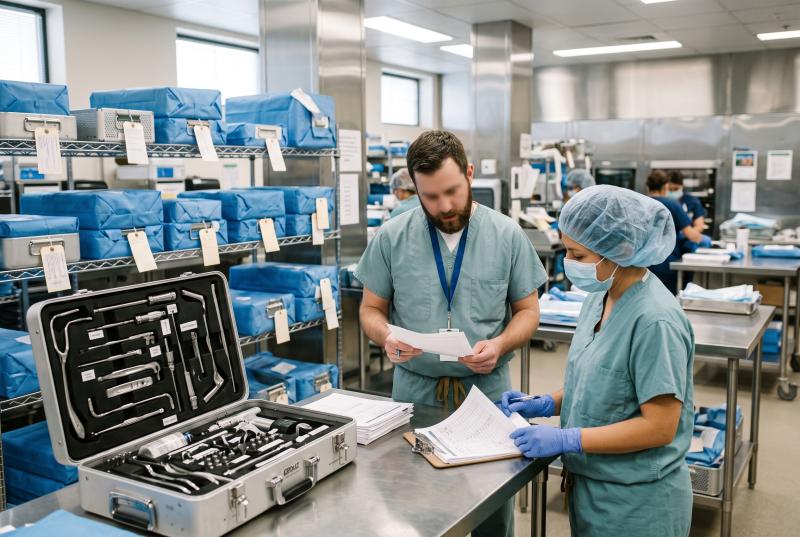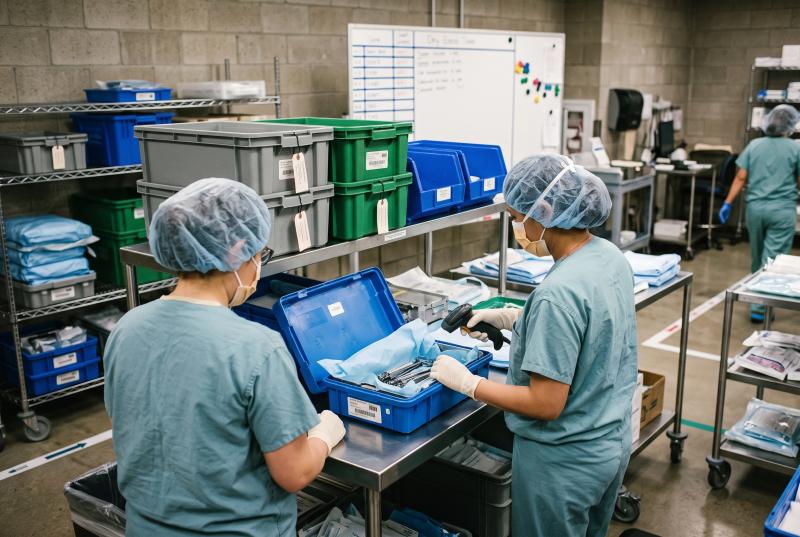
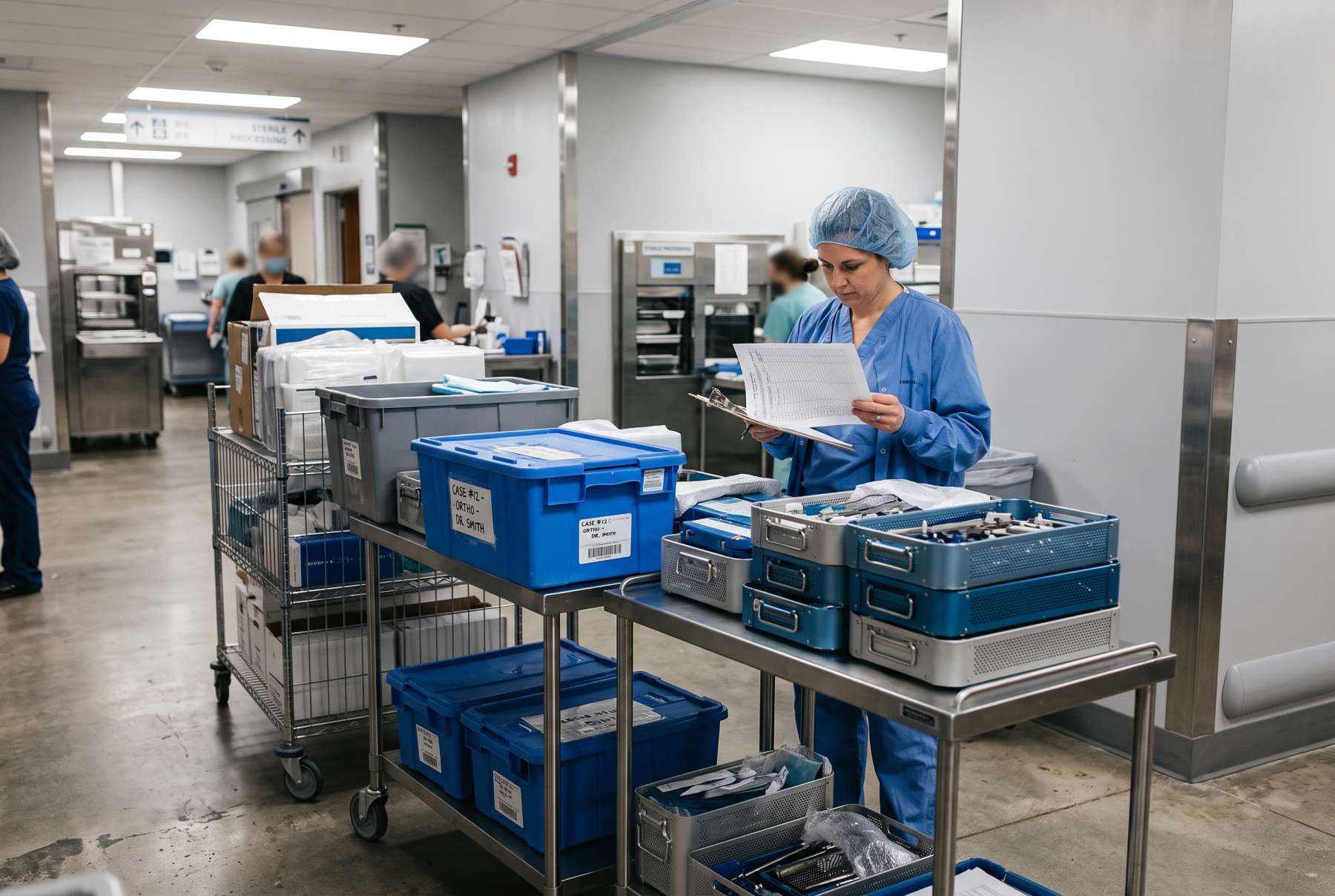
At 5:40 on a Tuesday morning, the ASC has a full orthopedic board, a sterile processing team working through the first cart, and a field representative asking whether the backup shoulder set arrived. The answer depends on which version of the inventory picture you trust. The schedule says the case is covered. A spreadsheet says the set left the distributor yesterday. The dock says a tote was delivered. Nobody can say with certainty where the tray is right now.
That is the operational tension behind the next phase of ASC growth. The question is no longer simply whether a facility should use owned inventory or loaner inventory. The more useful question is whether the organization can distinguish assets that move frequently from assets that are merely present, and whether it can make that distinction before a case is staged.
CMS has continued to move procedures toward outpatient settings. Its CY 2026 changes added 289 procedures to the ASC Covered Procedures List and another 271 codes that had been removed from the Inpatient Only List. CMS also issued the CY 2027 OPPS and ASC proposed rule, with comments due August 31, 2026. The final policy may change, but the direction is familiar: more procedure volume is being evaluated through an outpatient operating model.
For orthopedic distributors, manufacturers, 3PLs, and health systems, that direction makes inventory design more consequential. A tray that sits idle in the wrong location is not just excess stock. It can become a rushed transfer, a duplicate loaner request, a missed sterilization window, or a case-readiness problem that appears too late to fix.
Utilization is not the same as movement
Most inventory conversations begin with utilization. How many times did a set support a procedure last quarter? How many cases used a particular implant family? Which trays are sitting on the shelf?
Those are important questions, but they do not describe the same thing as movement. A tray can have low procedural utilization and still move constantly between a manufacturer, a distributor, a hospital, an ASC, and sterile processing. Another tray can be used often at one facility but remain locally available, creating a very different ownership decision.
This distinction matters because loaner inventory carries operational work even when it does not generate a recorded case. A set may be packed for a surgeon preference, sent to the wrong site, returned incomplete, held for a backup plan, or routed through decontamination before anyone confirms whether it was used. If the only data available is a utilization report, those movements disappear.
The same problem exists on the owned side. A health system may see a tray as an asset it already paid for, but ownership does not make it available. It may be in another building, awaiting repair, in sterile processing, on a case cart, or sitting in a receiving area without a confirmed destination. Book value and operational availability are not interchangeable.
The better analysis starts with two separate views. Utilization asks, “Was this asset used?” Movement asks, “How often did this asset need to be found, transferred, staged, sterilized, or returned?” Combining those views too early can lead to the wrong conclusion about what to buy, what to pool, and what to leave in a loaner program.
The ASC model exposes the gap faster
Hospitals can sometimes absorb an inventory mistake inside a large campus. An ASC usually has less room for ambiguity. It may have fewer backup sets, fewer sterile processing resources, less storage, and a tighter schedule built around a smaller number of procedure types. That does not make the ASC simpler. It makes the cost of uncertainty more visible.
Orthopedic ASCs also operate across a network of manufacturers, distributors, field representatives, implant vendors, and shared-service teams. A case may depend on a tray that is owned by the health system, an instrument set supplied by a manufacturer, and an implant kit delivered through a third-party logistics provider. Each party can have a reasonable record of its own step while the combined picture is still wrong.
Becker’s ASC reported in May 2026 that more than 600 ASCs were identified as performing total joint replacements. That is not just a volume story. It is a network design story. The more facilities perform specialized orthopedic procedures, the harder it becomes to manage inventory through local memory and informal escalation.
The common response is to add safety stock. Sometimes that is the right answer. But adding sets without understanding movement can hide the real constraint. The problem may not be that the network owns too few trays. It may be that the right trays are spending too much time in transit, arriving without enough processing time, or becoming invisible after a handoff.
That is why an inventory review should include questions such as:
- Which assets cross facility boundaries most often?
- Which sets spend the most time in receiving, staging, or sterile processing?
- Which trays are repeatedly requested as backups but rarely used?
- Which assets are technically nearby but not confirmed at the location where the case team needs them?
- Where are duplicate loaner requests compensating for a lack of location certainty?
These questions do not replace utilization reporting. They explain it. A tray with low use and high movement may need a different sourcing model from a tray with high use and low movement. Treating both as “underutilized” leaves the operational cost out of the decision.
Right-sizing starts with a live operating picture
The practical mistake is to make ownership decisions from a static inventory count. A count can tell an operations team what should exist. It cannot reliably tell the team what is available for tomorrow’s first case.
That requires visibility across the actual path of the asset: distributor warehouse, manufacturer, courier, hospital receiving, ASC storage, sterile processing, operating room, and return route. A handoff record is useful, but it is not the same as location certainty. “Delivered” may mean signed for at a loading dock. It does not necessarily mean ready for use.
For a distributor or manufacturer, movement history can show where a loaner pool is absorbing avoidable friction. A set that repeatedly travels between the same locations may be a candidate for local placement, a shared regional pool, or a different replenishment cadence. A set that rarely moves but is repeatedly held as contingency inventory may need a different commercial conversation with the customer.
For an ASC or IDN, the same history can show where owned inventory is failing to behave like available inventory. If a system owns enough trays on paper but still depends on emergency loaners, the missing asset may not be a purchase. It may be a transfer, processing, or staging problem.
This is where automated visibility has a practical advantage over barcode walks and phone trees. Manual checks are episodic. They happen when someone already suspects a problem. Always-on location data gives the organization a chance to see the pattern before the case is at risk. It also gives operations, field teams, and clinical users one shared picture instead of several partial ones.
The economics should be evaluated the same way. The question is not whether a tracking system is another line item. The question is whether the organization can identify the cost of lost trays, idle kits, duplicate shipments, emergency courier work, delayed cases, and staff time spent hunting. A per-asset model can make that calculation easier to test because the decision is tied to the inventory being managed rather than to the number of users who need access.
In practical terms, a right-sizing exercise should not begin with “How many sets do we need?” It should begin with “Which assets are creating work, and where does that work occur?” The answer may support more owned inventory, more loaner inventory, or less of both. Without movement data, the organization is guessing at the cause.
ASC growth will continue to make those guesses more expensive. CMS policy is one driver, but the operational effect is broader: more procedures are being distributed across facilities that must coordinate specialized assets without the slack of a hospital campus.
The sharper way to view owned versus loaner inventory is not as a procurement preference. It is as a visibility problem with a sourcing decision attached. Utilization tells you what was used. Movement tells you what the network had to do to make it available. The organizations that keep those measures separate will have a better chance of knowing which trays to own, which to borrow, and which should never have been moving in the first place.
Sources: CMS CY 2027 ASC proposed rule; CMS Medicare Payment Systems guidance; Becker’s ASC list of ASCs performing total joint replacements in 2026.