At 6:10 a.m., the recall notice is already in the inbox. The affected kit was shipped last week, but the shipment record only says it went to a health system account. Someone believes it is at the central warehouse. Someone else remembers seeing it at an ASC. A field representative says the set may have been used overnight and sent to sterile processing.
By the time the team starts calling, the recall has become a scavenger hunt.
That is the common misconception about tray and kit recalls. The hard part is not identifying the product on the notice. The hard part is locating every affected asset quickly enough to quarantine it before it reaches another case, another facility, or another decontamination cycle.
The FDA medical device recalls and early alerts page shows how often corrections and removals touch procedure kits, convenience kits, surgical packs, and other products that move through more than one operational environment. In May 2026, the FDA posted a Class I recall for the Halyard PERC TRAY kit. The notice directed customers to identify, segregate, and quarantine affected kits, with additional lots added after the initial communication. (fda.gov)
The requirement sounds straightforward. The operating reality is not. For distributors, manufacturers, and 3PLs, a recall is a test of whether the network knows where its assets are when the normal flow stops.
The recall clock starts before the first phone call
Most recall procedures are written around communication. Send the notice. Confirm receipt. Ask customers to check their inventory. Document the response. Those steps matter, but they assume the organization already knows which assets are in scope and where they physically sit.
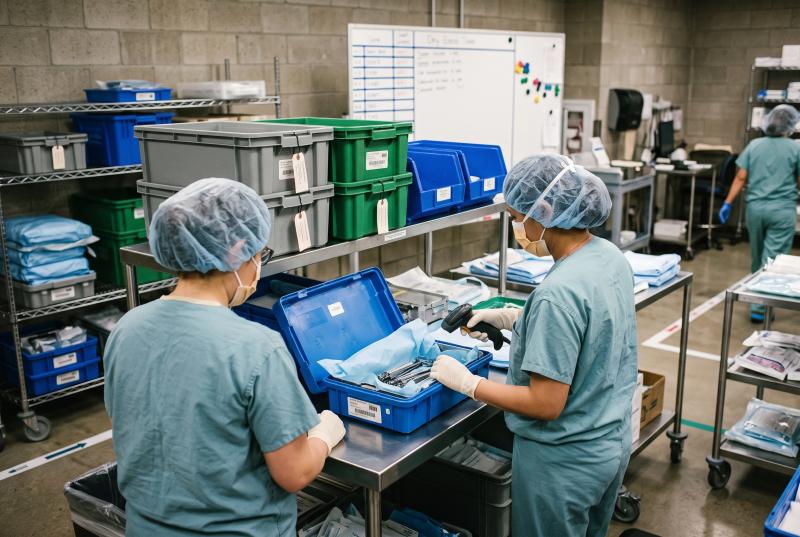
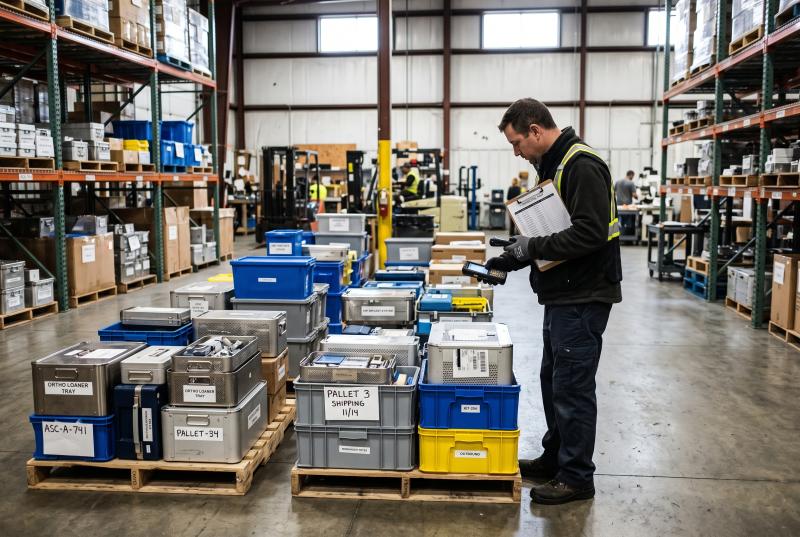
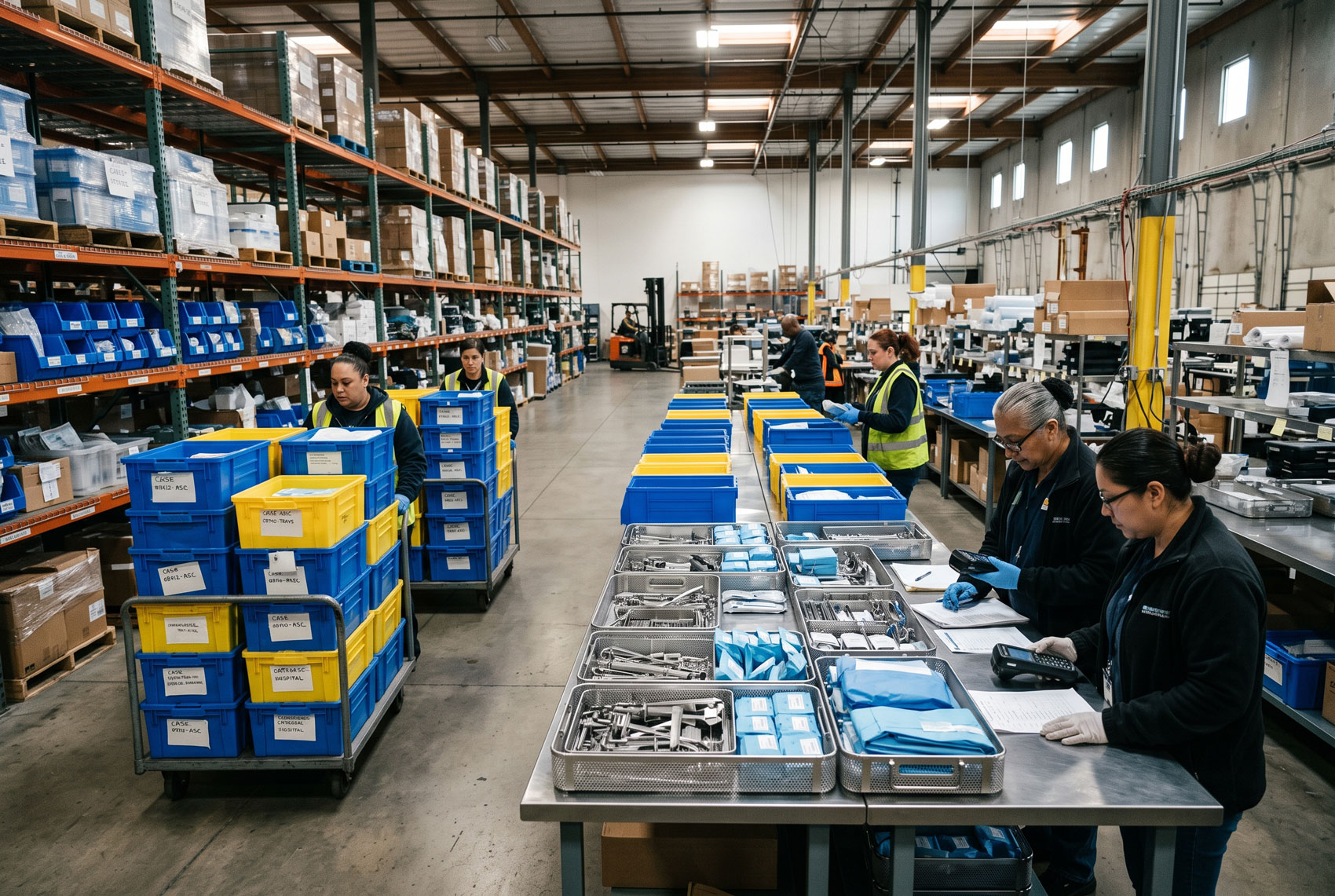
That assumption breaks down with surgical trays and loaner sets. A single kit may move from a manufacturer or distributor warehouse to a hospital dock, then to a regional sterile processing department, then to an ASC, and finally back through decontamination before anyone has reconciled its status. A field representative may carry a replacement instrument or a supplemental implant tote in a vehicle. A 3PL may have scanned the outbound shipment without knowing whether the customer staged it, opened it, used it, or returned it.
Those are not small gaps. They determine whether the team can answer the first operational questions:
- Which affected assets are still in the warehouse?
- Which ones are in transit?
- Which ones are at a hospital, ASC, or sterile processing department?
- Which ones are awaiting cleaning, inspection, or return?
- Which ones should be stopped before the next scheduled case?
A spreadsheet can contain the asset number and customer account. It may not contain the asset's current location. A barcode walk can produce a more current answer, but only after someone finds the asset and scans it. During a recall, that delay is the operational risk.
The difference is especially important as outpatient surgery expands. CMS's 2026 payment rule opened additional procedures to the ASC setting, while industry operators continue to describe growth in orthopedic, spine, and other higher-acuity outpatient work. More procedure volume means more trays and implant kits moving through more handoffs, often with lean teams and less spare inventory. (beckersasc.com)
A shipment record is not an asset record
Teams often begin recall response by searching shipment history. That is logical, but incomplete. Shipment history tells you where an asset was sent. It does not necessarily tell you where it is now.
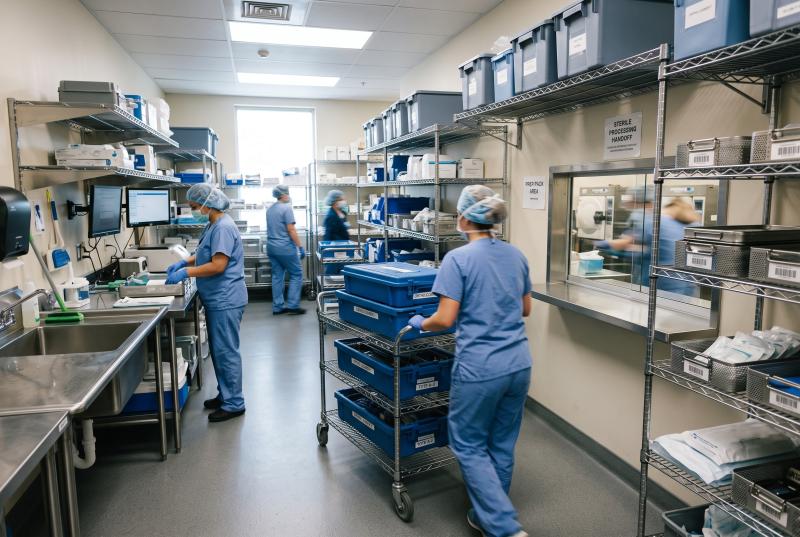
The distinction matters because a tray's operational identity changes as it moves. At the warehouse, it is an outbound order. At the hospital, it is a staged case resource. In sterile processing, it may be disassembled, decontaminated, wrapped, or waiting for inspection. At the ASC, it may be part of a preference-card build for tomorrow morning. The same physical asset can appear in several systems, each describing a different moment.
Recall teams need one shared picture across those moments. That does not mean every system must be replaced. It means location should not depend on a chain of individual memory.
Automated visibility is useful here because it reduces the gap between a recorded event and the asset's current whereabouts. If a tag remains with the tray or kit through normal handling and sterilization, the team has a better chance of seeing the asset after it leaves the dock and after it enters sterile processing. The value is not the alert itself. The value is knowing whether the affected set is still moving through the network, sitting in a known zone, or missing from the expected path.
This is also where the economics become practical. A manual recall search consumes the same people who are needed to stage cases, receive returns, reconcile inventory, and support field teams. The cost is not only staff time. It can include an unnecessary replacement shipment, an idle loaner set, a delayed procedure, or a kit that is quarantined without a clear replacement plan.
A recall system should therefore answer more than “Was the notice sent?” It should help answer “What is the next physical action?” Quarantine the set at the warehouse. Stop the transfer to the ASC. Confirm the tray is in decontamination. Route a replacement. Escalate the missing asset. Those decisions depend on location, not just documentation.
Quarantine is a workflow, not a status label
There is another failure point after an asset is found. Teams may mark an item as quarantined in a spreadsheet or quality system, while the physical kit remains in a shared staging area with other case-ready inventory. The record says “hold.” The dock says “available.”
That disconnect is familiar to anyone who has worked around loaner trays. A kit can be technically identified but operationally exposed. It may be sitting beside cleared inventory, inside a return cage, in a rep's vehicle, or on a cart headed toward a procedure. If the location is unclear, quarantine becomes a request for someone to remember what not to move.
The stronger process connects the recall decision to the asset's movement. Once a kit is located, the organization can assign responsibility at the place where the action must happen. Warehouse staff can isolate it before loading. A hospital team can verify it in sterile processing. A field representative can confirm that it is not part of a case build. A 3PL can prevent a return from being received as ordinary inventory.
That shared visibility also reduces the temptation to over-quarantine. When nobody knows which sets are affected, teams may hold every similar kit, every shipment to a customer, or every asset associated with a product family. That protects against uncertainty, but it can create a second problem: usable inventory disappears from the schedule while the investigation continues.
Location data does not replace quality decisions or the official recall process. It makes those decisions executable. It gives the quality team a more reliable list of physical assets to investigate, and it gives operations a clearer path for separating affected inventory from inventory that can keep moving.
The sharper way to view recall readiness is simple: a recall is not finished when the notice is distributed, and it is not controlled when a database says “quarantined.” It is controlled when every affected tray, loaner set, implant tote, or procedure kit has a known place, a named next action, and no plausible route into the next case.
That is why recall preparedness belongs on the operations agenda, not only in the quality department. The question is not whether the organization has a recall policy. Most do. The question is whether the policy can find a physical asset after it has crossed the dock, entered sterile processing, moved to an ASC, or disappeared into a field handoff.
When the answer depends on a spreadsheet, a barcode walk, or a phone tree, the clock is already running. When the network can see the asset, the recall becomes what it should have been from the start: a controlled movement problem with a documented compliance outcome.